Staring at a marketing plan that feels more like a wish list than an actual strategy? You’re not alone. A fractional CMO is a seasoned marketing executive who steps in to provide C-suite leadership and strategy, but on a part-time basis.
This gives your startup access to top-tier talent without the hefty cost and long-term commitment of a full-time hire. They are, in short, your secret weapon for scalable growth.
Your Startup's Secret Weapon for Scalable Growth

Most founders eventually hit a wall. Your vision for growth is huge, but your marketing engine just can't keep up. You know you need senior leadership to build a predictable revenue machine, but the six-figure salary, benefits, and equity package for a full-time Chief Marketing Officer feel miles out of reach.
This is exactly where the fractional CMO model changes the game.
Don’t think of them as a consultant who drops off a strategy deck and disappears. Think of them as a true member of your leadership team—a special forces operative for your marketing, deployed for critical missions to hit specific, high-stakes goals.
Beyond Consulting: A True Strategic Partner
Unlike a traditional agency or consultant, a fractional CMO really embeds themselves in your business. They take genuine ownership of the results, mentor your junior marketers, and make sure every dollar you spend on marketing is tied directly to a business outcome.
For an early-stage company, that integrated approach makes all the difference.
A great fractional CMO is obsessed with designing strategies that generate business leads and grow sales. Their goal isn't just to make things happen fast; it's to build a foundation for growth that lasts. They bring structure to the chaos.
A fractional CMO doesn’t just fill a leadership gap; they install a strategic operating system for your marketing. They build the engine, show your team how to run it, and ensure it’s ready to scale long after their engagement ends.
A Growing Trend for Smart Startups
This model has quickly gone from a niche hiring tactic to a mainstream strategy for high-growth companies. It’s not just a fad.
Analysts now project a 50% increase in fractional CMO roles by 2025 among mid-market tech firms, all driven by the demand for flexible, expert leadership. This just shows how effective this modern approach to outsourced marketing has become. You can read more about the projected growth of fractional roles on GrowthGenerators.io.
What a Fractional CMO Actually Does for Your Business

It’s easy to think of a fractional CMO as just a part-time marketing head. But their real job goes way beyond approving campaigns and sitting in on meetings. They’re hired to turn marketing from a cost center into a predictable growth engine.
Think about a startup with a small, hustling marketing team. They’re running ads, posting on social, and sending out emails. There's a ton of activity, but it all feels disconnected. No real strategy, no clear ROI. This is the exact kind of chaos a fractional CMO is built to fix.
From Chaos to Cohesion: The Strategy Builder
The first thing a good fractional CMO does is get a handle on the entire business—not just marketing. They dig into sales, product, and finance to see the full picture. Their initial mission is to build a strategic foundation that ties every single marketing action back to a specific business goal.
This isn't about creating some hundred-page document that gathers dust. It’s about building a living, breathing plan that guides day-to-day decisions. A key part of this is to develop a comprehensive content marketing strategy that makes sure your message hits the right people and gets them to act.
Their role usually boils down to these core functions:
- Go-to-Market (GTM) Refinement: Sharpening your ideal customer profile (ICP), messaging, and positioning so you stand out in a noisy market.
- Budget and Resource Allocation: Making sure every marketing dollar is aimed at the channels with the highest potential return.
- Team and Process Development: Building a marketing function that can scale, with clear roles and efficient workflows.
The Data-Driven Culture Architect
A lot of startups run on gut feelings and vanity metrics. A fractional CMO walks in and installs a data-first mindset. They pinpoint the key performance indicators (KPIs) that actually matter for growth, like customer acquisition cost (CAC), lifetime value (LTV), and pipeline velocity.
They don’t just track numbers; they build dashboards and reporting systems that make performance visible to everyone. This transparency helps the team make smarter calls and shows you, the founder, exactly how marketing is hitting the bottom line. Suddenly, marketing meetings shift from "What did we do?" to "What did we learn, and how do we get better?"
A fractional CMO’s true value isn't just in the strategies they create, but in the operational discipline they instill. They turn random acts of marketing into a systematic process for generating predictable revenue.
This shift is crucial. With a fractional CMO, you have a leader who is accountable for a clear set of outcomes: developing the plan, leading the team, and managing the budget to drive results.
The Player-Coach and Team Mentor
A great fractional CMO is both a strategist and a doer—a true "player-coach." They aren't afraid to roll up their sleeves and get their hands dirty, whether that means setting up a campaign, writing copy, or digging into analytics.
More importantly, they use these moments to mentor and upskill your existing team. For junior marketers, this guidance is gold. It helps them grow from task-doers into strategic thinkers. The fractional CMO elevates the whole team's game, leaving behind a stronger, more self-sufficient marketing function that can keep the momentum going long after their contract ends. They build your company's marketing muscle.
When Is the Right Time to Hire a Fractional CMO?
Timing is everything in a startup. Move too soon on a big hire, and you’ll burn through precious cash. Wait too long, and you could miss your window for growth altogether.
Figuring out the right moment to bring in a fractional CMO isn’t about hitting a certain revenue milestone. It’s about recognizing the growing pains that signal your current marketing approach is officially holding you back.
If you’re a founder, some of these might feel uncomfortably familiar. Think of this as a quick diagnostic. If you find yourself nodding along to more than one of these points, it’s a pretty clear sign that expert marketing leadership has shifted from a “nice-to-have” to a must-have.
Your Marketing Spend Feels Like a Black Box
Are you pumping money into marketing channels without any real clue what’s coming back out? It’s a common trap. Startups often fall into “random acts of marketing”—a little bit of Google Ads, a few social media posts, a sponsored newsletter—with no real strategy tying that spend to revenue.
If you can’t confidently answer, "What’s our customer acquisition cost, and can we sustain it?" then it's time for a change. A fractional CMO’s first job is to stop the bleeding. They install the right tracking, build a real dashboard, and make sure every dollar you spend is a calculated investment, not a gamble.
This is a critical distinction. You need a fractional CMO when your problem is strategy, not just execution. If your junior team is great at getting tasks done but can’t connect their work to the big picture, a fractional leader provides that missing layer of strategic oversight. You can discover more insights on when to hire a fractional CMO at ChiefMarketer.com.
The Founder Is the Marketing Bottleneck
In the early days, founder-led marketing is your secret weapon. No one has more passion or product knowledge. But as you scale, that superpower becomes a serious bottleneck.
If you’re still the one approving every social media post, writing all the email copy, or fiddling with ad campaigns, you’re not doing your most important job: leading the company.
When the marketing plan lives entirely in your head, it can't scale. A fractional CMO comes in to get that vision out, turn it into a documented system, and build a machine the whole team can run. This frees you up to get back to product, fundraising, and steering the ship.
If your marketing grinds to a halt the second you take a vacation, you don’t have a marketing function—you have a marketing dependency. A fractional CMO is hired to break that dependency and build a self-sufficient growth engine.
You Need a Growth Story for Your Next Funding Round
Investors don’t just put money into a great product; they invest in a believable plan for growth. Walking into a pitch meeting with vague marketing ideas and zero hard data is a fast track to getting a "no."
You need a compelling, data-backed story that proves you understand your market, know your customer, and have a clear plan to scale efficiently.
A fractional CMO is an expert at building that narrative. They help you:
- Define Your Total Addressable Market (TAM): Articulate the size of the prize with real numbers.
- Solidify Your Go-to-Market (GTM) Strategy: Detail exactly how you’re going to win that market.
- Build Financial Projections: Back up your strategy with realistic forecasts for CAC, LTV, and revenue.
Bringing in an experienced marketing leader signals to investors that you’re serious about building a scalable, professional company. It adds instant credibility to your pitch and shows you’re making smart moves to fuel the next stage of growth. If these situations sound familiar, your "right time" might be right now.
Understanding The Cost And Engagement Models
For any founder, every dollar counts. I get it. The idea of bringing in C-suite talent can seem intimidating, but the fractional CMO model was built with the startup budget in mind. It’s all about getting the exact expertise you need, right when you need it, without the long-term financial weight of a full-time executive salary.
So let’s break down how these engagements actually work. This isn’t a one-size-fits-all deal. It’s a flexible partnership designed to match your startup's specific stage and goals, letting you invest in strategy without breaking the bank.
This chart lays out the common pain points that push founders to look for a fractional leader in the first place—things like murky ROI on ad spend, the founder becoming a growth bottleneck, or needing a convincing story to raise the next round.
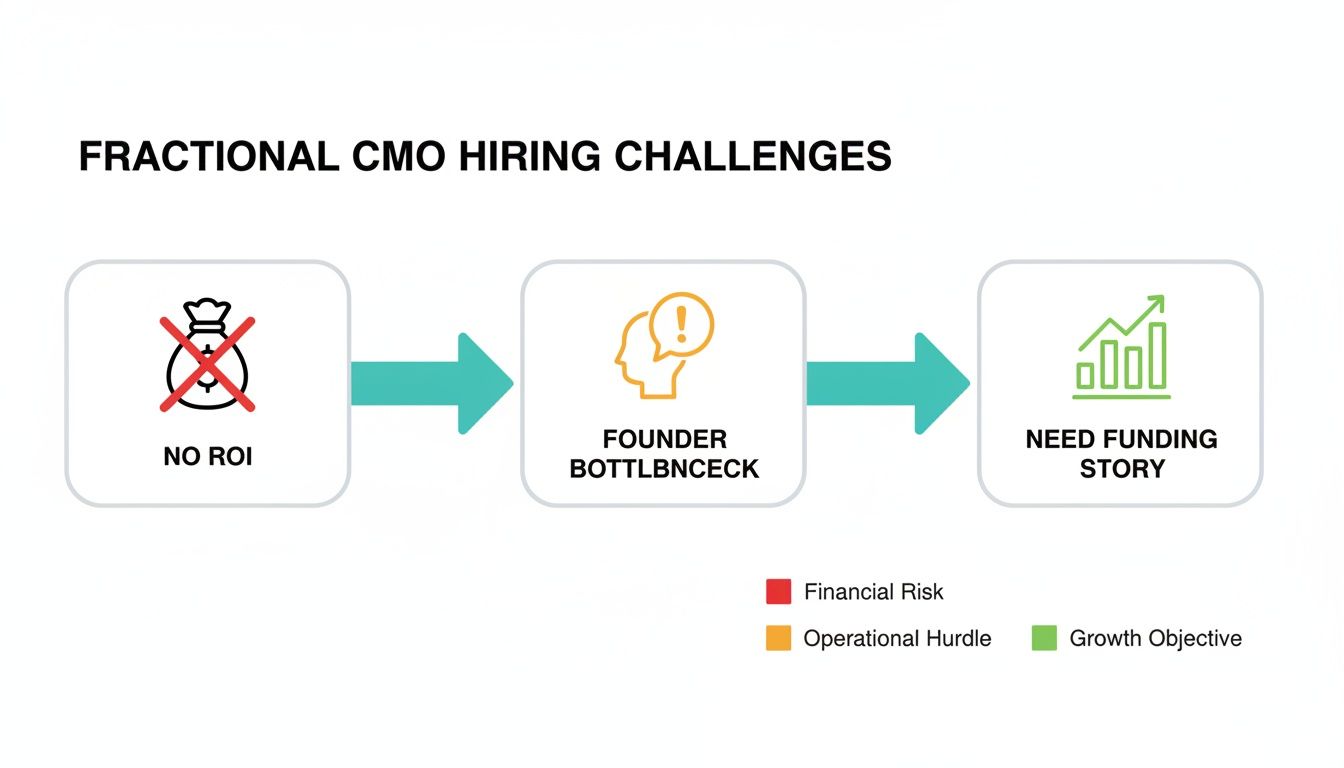
These are the exact gaps a fractional CMO is designed to fill, bringing in senior strategic leadership when and where it's needed most.
Common Engagement Models
When you partner with a fractional CMO, the arrangement usually falls into one of three buckets. Each has its own rhythm and is built for different business needs.
- Monthly Retainer: This is the go-to model for most startups. You pay a flat monthly fee for a set amount of the CMO's time and brainpower. It’s perfect for companies needing ongoing strategic leadership, team management, and execution oversight.
- Project-Based Fee: Got a specific, high-stakes mission? Maybe it’s a product launch, a rebrand, or building out your first marketing plan for an investor pitch. A project-based engagement has a defined scope and timeline, making it a great fit for targeted, high-impact initiatives.
- Advisory Role: This is the lightest-touch option. Here, the fractional CMO acts as a strategic sounding board, offering high-level guidance during a few monthly calls. It's best for founders who already have a solid team in place but need that C-suite gut check to stay on the right track.
The Real Cost Economics
So, what does a fractional CMO actually cost? It's a critical question. Industry data shows fractional CMO retainers typically run between $6,000 and $20,000 per month. For U.S.-based B2B tech, that figure is often in the $10k–$20k range, depending on the scope.
Now, compare that to a full-time CMO, where total annual compensation often starts at $250,000 and can easily sail past $400,000 once you factor in bonuses, benefits, and equity. You can discover more insights about fractional CMO pricing on SaaSconsult.co.
The right way to look at the cost isn't as an expense, but as an investment in efficiency. You're paying for pure strategic output without funding a full-time executive's learning curve, benefits package, or onboarding period.
This is where the ROI becomes crystal clear. For what you might pay a mid-level marketing manager, you get a seasoned executive who has already solved the exact problems you’re facing. They bring frameworks, experience, and leadership that would otherwise be way out of reach for an early-stage company. These flexible models are a core part of what makes effective fractional CMO services so powerful.
To put it in perspective, here’s a side-by-side look at the fully-loaded first-year cost difference.
Fractional CMO vs. Full-Time CMO First-Year Cost Comparison
| Cost Component | Full-Time CMO (Annual Estimate) | Fractional CMO (Annual Estimate) | Key Difference |
|---|---|---|---|
| Base Salary | $220,000+ | $96,000 (at $8k/month) | Immediate 55%+ salary savings. |
| Benefits & Payroll Tax | $45,000+ (20% of salary) | $0 | The fractional CMO covers their own benefits. |
| Performance Bonus | $50,000+ (20-30% target) | $0 | Bonuses are not standard in retainer models. |
| Equity Grant | 1.0% – 2.0% of company | $0 | Preserves precious equity for your core team. |
| Recruiting & Onboarding | $30,000+ | $0 | No recruiter fees or lengthy ramp-up time. |
| Total First-Year Cost | ~$345,000 + Equity | ~$96,000 | Over 70% cost reduction plus equity preservation. |
The numbers don't lie. A fractional CMO gives you access to top-tier strategic leadership for a fraction of the fully-loaded cost. It’s easily one of the most capital-efficient growth investments a startup can make.
How to Find and Evaluate the Right Fractional CMO
Finding the right fractional CMO is more like choosing a strategic co-pilot than hiring a contractor. This isn’t just a skills match; it’s about finding a partner who gets your business on a gut level and can slot right into your leadership team. You’ll need a different playbook than you'd use for a typical hire.
Top-tier fractional talent doesn’t hang out on standard job boards. They're found through curated networks, industry referrals, and specialized firms that know exactly what a B2B tech company needs. Your goal is to find someone who isn't just looking for a gig but is genuinely invested in building a high-impact partnership.
Where to Find Top-Tier Talent
Forget about hitting "Easy Apply" on LinkedIn or sifting through Indeed. The best fractional CMOs are sourced through focused channels where quality absolutely trumps quantity. Your search should be targeted from day one.
Here are the most effective places to look:
- Fractional CMO Marketplaces and Firms: Specialized agencies vet candidates for you, connecting you with proven leaders who have a track record in roles just like yours.
- Venture Capital and Private Equity Networks: If you're venture-backed, your investors are a goldmine. They often keep a roster of trusted fractional execs they recommend to their portfolio companies.
- Peer and Industry Referrals: Ask other B2B tech founders who they’ve worked with. A warm introduction from someone you trust is often the best way to find a high-caliber leader.
This targeted approach means you’re looking at candidates who already understand the unique pressures and opportunities of a high-growth tech startup.
Vetting for Deep B2B Tech Experience
Once you have a pool of candidates, the real evaluation begins. For a B2B tech startup, generic marketing experience just won't cut it. You need someone who has lived and breathed your world—someone who understands long sales cycles, complex buyer journeys, and the nuances of selling software.
Look for a "T-shaped" marketer. This means they have a broad understanding of all marketing channels but bring deep, hands-on expertise in the two or three that matter most for your growth stage. You can read more about the T-shaped marketer concept on Animalz.co.
The right fractional CMO for a startup is a "player-coach." They have the strategic vision to craft a winning game plan from 30,000 feet, but they aren't afraid to get on the field and execute plays themselves.
This dual capability is non-negotiable. An executive who only wants to direct from the sidelines is a recipe for disaster in a lean startup. You need a leader who can build the strategy and then roll up their sleeves to help the team bring it to life. For a deeper look, check out our guide on how to hire a fractional CMO for your team.
Critical Qualities and Red Flags
During interviews, your questions should be designed to uncover not just what a candidate has done, but how they think and operate. Go beyond the resume and probe for real-world examples that show they can handle your specific challenges.
Essential Qualities to Look For:
- Data Fluency: Can they talk in terms of CAC, LTV, and pipeline velocity? Ask them to walk you through a marketing dashboard they've built.
- A Bias for Action: How quickly do they move from analysis to execution? Ask about a time they scored a "quick win" to build momentum in the first 30 days.
- Mentorship Mindset: How have they upskilled junior team members? A key part of their value is their ability to elevate your entire team.
- Strong Opinions, Loosely Held: Do they have conviction but also the humility to pivot when the data proves them wrong?
On the flip side, there are clear red flags that signal a poor fit.
Red Flags to Watch Out For:
- "Big Company" Language: If they talk endlessly about managing huge teams and massive budgets, they'll likely struggle in a scrappy startup environment.
- Focus on Vanity Metrics: Be wary of candidates who emphasize metrics like social media followers or website traffic without connecting them directly to revenue.
- Vague Strategy Talk: If they can't offer specific, actionable ideas for your business after learning about it, they might be more of a theorist than a doer.
- Lack of Curiosity: A great fractional CMO will ask you more questions than you ask them. If the interview feels one-sided, it's a bad sign.
Making the right choice comes down to finding that rare blend of strategic expertise, hands-on capability, and cultural alignment. By focusing your search in the right places and asking the right questions, you can find a fractional CMO who will become a true growth partner for your business.
Making Your First 90 Days a Success

You’ve found your fractional CMO and the contract is signed. Now what? The first 90 days are absolutely critical. This isn’t a slow, leisurely ramp-up; it’s a focused sprint designed to build momentum, earn trust, and start delivering tangible results—fast.
A structured plan is the key to managing expectations and making sure the engagement is productive from day one. By breaking this initial period into 30-day milestones, you create a clear roadmap for both you and your new marketing leader. This is how you build a high-impact foundation that leads to real business growth.
Month 1: The Deep Dive and Quick Wins
The first 30 days are all about total immersion. Your fractional CMO acts like a sponge, absorbing everything they can about your business. They’ll dig into your sales process, product roadmap, customer feedback, and financial goals.
Expect them to conduct audits of your current marketing channels, team skills, and tech stack. The goal here is simple: find the biggest gaps and the most promising opportunities.
At the same time, a great fractional CMO will be hunting for a few "quick wins." These are high-impact, low-effort moves you can make right away to build momentum and show an early return on your investment. It could be as simple as optimizing a high-traffic landing page or plugging a leaky hole in your sales funnel.
The first month isn't about launching a massive rebrand. It's about listening, learning, and proving value fast. Quick wins build the trust and internal buy-in needed for the bigger strategic shifts to come.
Month 2: Strategy, Alignment, and Foundation Building
With a solid grasp of the business, the second month is all about building the strategic framework. Your fractional CMO will translate their findings from the deep dive into a documented marketing strategy and an initial budget. This isn't some theoretical document destined for a shelf; it's an actionable roadmap.
This phase is also crucial for getting everyone on the same page. Your fractional leader will work closely with sales, product, and finance to ensure total alignment.
Key activities during this period include:
- Finalizing the Marketing Strategy: Documenting key goals, target audiences, and the primary channels you'll use to reach them.
- Establishing KPIs: Defining the core metrics that actually measure success and building the reporting dashboards to track them.
- Aligning with Sales: Creating a shared understanding of lead definitions, MQLs vs. SQLs, and the handoff process.
Month 3: Execution, Measurement, and Refinement
By day 90, the focus shifts entirely to execution. The strategic foundation is set, the team is aligned, and the first campaigns are live. Now, it's all about running the plays, gathering data, and optimizing performance.
Your fractional CMO will establish a clear operational rhythm—think regular check-ins and performance reviews. They’ll actively manage the budget, tweak campaigns based on early results, and mentor your marketing team. This is where the strategic plan becomes a living, breathing part of your company's growth engine, setting the stage for scalable success.
Common Questions Founders Ask About Fractional CMOs
Even after you get the concept, the practical questions always follow. I get it. Here are the straight answers to the questions that come up most often, designed to clear up any confusion so you can make a smart call.
How Is a Fractional CMO Different from a Marketing Agency?
This is probably the most important distinction to make. Think of it this way: a marketing agency is the “hands.” They’re the ones you hire to execute specific tasks—run your Google Ads, write blog posts, or manage your social media accounts. They’re an external vendor you pay for a service.
A fractional CMO, on the other hand, is the “brain.” They plug directly into your leadership team and take full ownership of your marketing strategy, budget, and results. They’re the one who decides what the agency or your internal team should be doing, why they should be doing it, and whether it's actually working. They don't replace the need for execution; they make sure every dollar you spend on it is tied to a real business goal.
What Kind of Results Should I Realistically Expect?
Don't expect overnight miracles. The first 90 days are all about building a solid foundation, not 10x-ing your leads in the first month. Anyone who promises that isn't being straight with you.
What you should expect is a clear, documented marketing strategy and a budget that actually makes sense for your business objectives. You’ll finally get KPIs and reporting dashboards that pull you out of the guesswork and into data-driven decisions. The biggest change you'll feel is the shift from chaotic, reactive marketing to a structured, strategic approach. That groundwork is what makes predictable, scalable growth possible down the line.
Think of it like building a house. The first few months are spent pouring the foundation and framing the structure. It might not look like a finished home yet, but it's the most critical work for ensuring everything built on top is stable and strong.
Can a Fractional CMO Manage My Existing Team?
Absolutely—and honestly, that’s one of their most valuable functions. A great fractional CMO doesn't just show up and start directing traffic; they mentor. They provide the senior leadership your junior or mid-level marketers have been missing, helping them level up their skills and grow into future leaders.
They’ll help prioritize workloads, connect day-to-day tasks back to the bigger picture, and upskill your people through hands-on guidance. This mentorship is a huge value-add because it strengthens your in-house marketing muscle. When their engagement is over, they leave your team more capable and self-sufficient than they found it.
Ready to see how senior marketing leadership can change the growth trajectory for your B2B tech startup? Value CMO provides the strategic expertise you need without the full-time overhead. Book a call with us today to start building your growth engine.