
To build a buyer persona that’s genuinely useful, you need to dig deep into your target audience and create a semi-fictional, yet incredibly detailed, picture of your ideal customer. It’s a mix of art and science—blending the hard quantitative data from your analytics with the rich qualitative insights you can only get from real customer conversations. When you get it right, this profile becomes the north star for your marketing, sales, and even product teams.
Why Most Buyer Personas Gather Dust
Let’s be honest. Most buyer personas are just well-intentioned fiction.
They’re usually born out of a high-energy workshop, exported as a slick PDF, and then promptly buried in a shared drive, never to see the light of day again. This is the sad fate of personas built on guesswork and generic templates.
This guide is different. We’re skipping the fluff and showing you how to build a data-driven tool that actually sharpens your go-to-market strategy. Instead of a static document, you’ll end up with a living, breathing profile that your entire organization can actually get behind.
From Useless to Indispensable
The real problem with most personas is that they’re completely disconnected from reality. They might describe "Marketing Mary" as a 35-year-old who loves yoga and owns a golden retriever, but they completely miss what actually matters: her real-world challenges, her career motivations, and what her day-to-day work life looks like. Unsurprisingly, these personas don't help your team make better decisions.
An effective buyer persona goes way beyond the basic demographics. It answers the questions that truly count:
- What are their primary goals? Not just how they relate to your product, but what are they trying to achieve in their career?
- What are their biggest frustrations? Pinpointing their real struggles helps you position your product as the clear solution.
- Where do they get their information? Knowing their trusted blogs, podcasts, or communities tells you exactly where you should be spending your time and money.
- What does a "win" look like for them? When you understand their definition of success, you can align your message with what they really want.
The whole point of a buyer persona is to build empathy. It turns "the user"—an abstract concept—into a relatable person. This simple shift makes it so much easier for everyone, from product managers to copywriters, to stay laser-focused on solving real customer problems.
The Cost of Stale Personas
Even the best-researched personas have a shelf life. Markets shift, customer needs change, and new challenges pop up all the time. A persona you created two years ago? It's probably obsolete today.
Failing to keep your personas updated isn't just a missed opportunity; it's a strategic risk. It leads directly to misaligned messaging, ineffective campaigns, and a whole lot of wasted marketing spend.
In fact, one study found that over 60% of companies that updated their buyer personas within the last six months exceeded their lead and revenue goals. Keeping your finger on the pulse of your audience is directly tied to business growth. If you want to dig into the data, check out the insights on current buyer personas from Salesgenie.
Gathering Your Raw Materials
Let’s get one thing straight: great personas aren’t born in a conference room brainstorming session. They’re built on a solid foundation of data. Think of yourself as a detective piecing together a complete picture of your customer. Your mission is to combine the "what"—hard numbers like website behavior—with the much more telling "why" that only comes from real conversations.
This is the fundamental shift you need to make. Move away from assumptions and toward a data-driven approach.
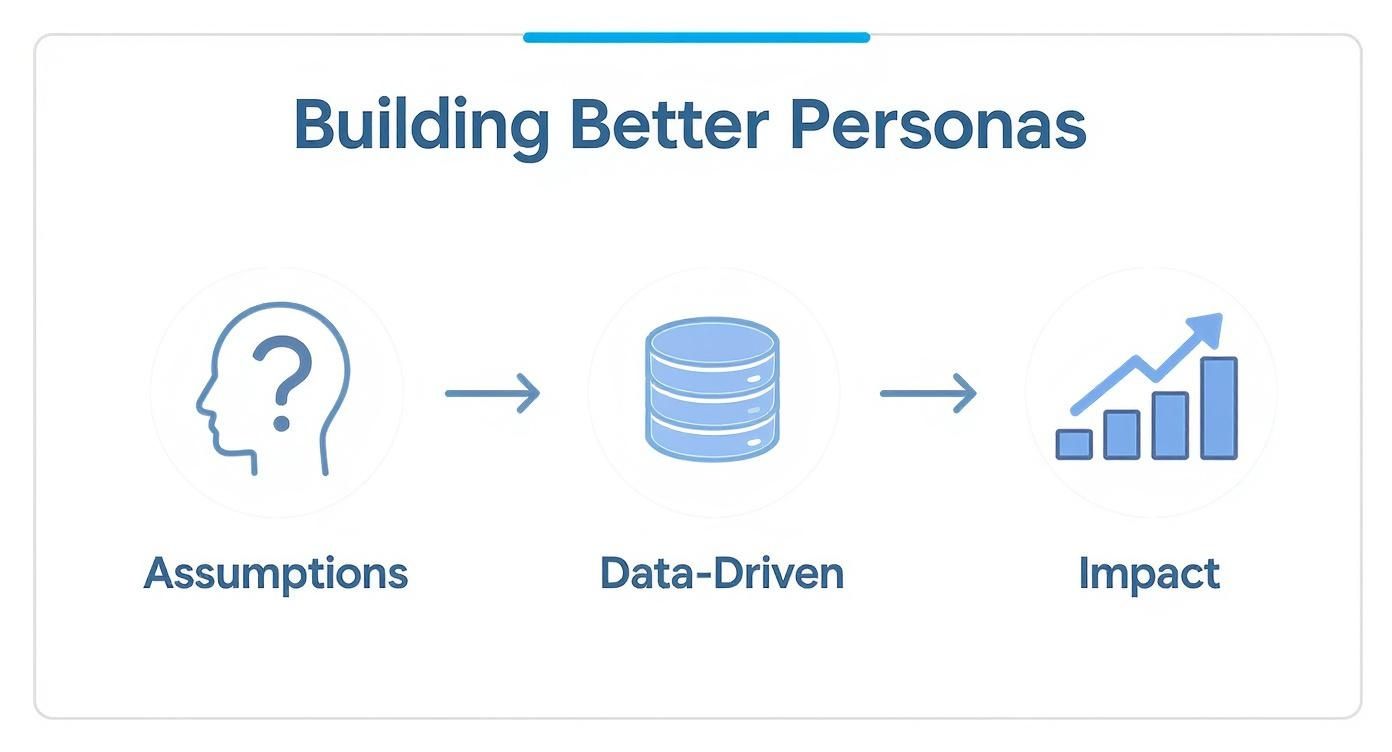
This is what turns a persona from a document that collects dust into a tool that actually drives growth.
Before you start digging, though, make sure you've locked down the basics of identifying your target audience. It’s a crucial first step that ensures you’re not wasting time collecting data from the wrong people. Once you know who you’re looking for, it’s time to start gathering intel.
Your Data Gathering Toolkit
To build a complete picture, you need to pull from multiple sources. Each one gives you a different piece of the puzzle. Here’s a quick breakdown of where to look and what you'll find.
| Data Source | Type of Insight | Actionable Tip |
|---|---|---|
| CRM Data | Quantitative | Look for patterns in job titles, company sizes, and industries of your best customers. Filter for your highest LTV accounts. |
| Sales Team Interviews | Qualitative | Uncover common objections, "aha!" moments, and the exact language prospects use when describing their problems. |
| Customer Support Tickets | Qualitative | Find out where customers get stuck, what features confuse them, and what they wish your product could do. |
| Customer Interviews | Deep Qualitative | Get the full story behind their purchase decision, their day-to-day challenges, and the results they've achieved. |
| Website Analytics | Quantitative | Track which blog posts and pages are most popular with your target segment. See what content resonates. |
| Social Media Listening | Qualitative | Eavesdrop on conversations in relevant communities (like LinkedIn Groups or Reddit) to understand industry trends and pain points. |
Mixing these sources gives you a much richer, more accurate view than relying on just one or two. You get the numbers to back up the stories, and the stories to explain the numbers.
Tap into Your Internal Goldmines
You'd be surprised how much valuable data is already floating around inside your company. Your sales and customer support teams are on the front lines, having real conversations every single day. They hear the unfiltered frustrations, the specific goals, and the exact words your customers use.
Start by setting up a few informal chats. Don't make it a big, formal meeting. Just ask them:
- What are the top three questions you get on every call? This points directly to knowledge gaps and immediate pain points.
- What objections do you hear over and over? This is a direct line into your audience's biggest fears and concerns.
- What's the "aha!" moment that makes a prospect lean in? Understanding what makes your solution click is pure gold.
This internal feedback is the fastest way to start shaping a realistic persona. It also gets key teams invested in your B2B SaaS marketing strategy because it’s built on shared customer knowledge, not just marketing’s assumptions.
Conduct Interviews That Feel Like Conversations
Surveys are useful for getting data at scale, but one-on-one interviews are where the magic happens. This is where you uncover the deepest insights.
The key is to make these feel less like interrogations and more like casual chats. Your goal isn't just to validate what you think you know; it's to discover what you don't.
Aim to interview a mix of your best customers, brand-new customers, and even prospects who chose a competitor. This variety is your best defense against confirmation bias and gives you a much more rounded view of the market.
When you're talking to them, lean on open-ended questions. Try things like, "Can you walk me through a typical day in your role?" or "What's the single biggest headache you're dealing with when it comes to X right now?" The stories they share will give you the texture, personality, and direct quotes that bring a flat persona to life.
Turning Data Into a Human Story
All that data you've gathered is just noise until you give it a voice. This is where the real work of creating a buyer persona begins—it’s less about spreadsheets and much more about storytelling. Your goal is to take those raw interview notes, survey results, and analytics reports and shape them into a living, breathing character your team can actually understand and rally behind.
Think of yourself as a novelist crafting a main character. You wouldn’t just list their eye color and job title; you’d dig into their dreams, their fears, and what really makes them tick. The same idea applies here. You’re building a narrative that explains the why behind their actions, not just the what.
It all starts by immersing yourself in the data and looking for the threads that tie everything together.
Find the Patterns in the Chaos
As you start sifting through your research, you’ll begin to notice recurring themes. Maybe a handful of interviewees mentioned feeling overwhelmed by their current tools. Or perhaps your sales team keeps hearing the same pushback on budget. These aren't just random data points—they are the building blocks of your persona's story.
Don't just skim the surface. You need to dig in and start clustering related insights.
For instance:
- Group powerful quotes: Pull out the emotional, memorable lines from interviews that perfectly capture a frustration or a goal.
- Identify common roadblocks: What are the top three challenges that keep popping up in surveys and support tickets?
- Connect behaviors to feedback: Notice how analytics data lines up with what people are telling you. Maybe you see high traffic to your pricing page, and your sales team confirms that cost is a major talking point in their calls.
This synthesis is how you create buyer personas that feel authentic. You’re moving from a pile of disconnected facts to a cohesive set of motivations and pain points that define your ideal customer.
The most powerful personas feel like real people because they are built from the collective voice of many real people. Look for the shared human experiences in your data—the universal struggles and aspirations—and use those as the foundation for your persona's narrative.
From Insights to a Full Profile
Once you’ve spotted the patterns, you can start building the actual persona profile. The key here is to move beyond generic demographics and construct a rich, multi-dimensional character. A truly useful persona includes both professional context and personal drivers, because people don’t just leave their humanity at the office door.
To bring your persona to life, focus on these core components.
1. Give Them an Identity
Start with the basics to make them feel real. Assign a name, a job title, and find a stock photo that feels right. This simple step makes it so much easier for your team to talk about "Sarah the Startup CEO" instead of a faceless "Segment B."
2. Detail Their Professional World
Next, flesh out their work life. For B2B companies, this is where you really need to get specific.
- Role and Responsibilities: What does their day actually look like? Are they stuck in back-to-back meetings or do they have time for deep work?
- Key Performance Indicators (KPIs): How is their success measured? Knowing this helps you connect your product's value directly to their performance goals.
- Tools They Use: What software is already part of their daily routine? This gives you clues about their tech-savviness and potential integration opportunities.
3. Uncover Their Personal Motivations
Finally, add the human element. This is what separates a good persona from a great one.
- Goals: What are they trying to achieve in their career? Are they aiming for a promotion, trying to earn industry recognition, or just looking for ways to make their job less stressful?
- Challenges: What keeps them up at night? Is it the fear of falling behind competitors, the stress of managing a difficult team, or constant pressure from their boss?
- Watering Holes: Where do they go for information and advice? Name specific blogs, podcasts, influencers, or conferences they trust. This becomes your roadmap for content and distribution.
By combining these elements, you create a profile that is both data-driven and deeply empathetic. Your team won't just know who they're targeting; they'll finally understand why it matters to that person.
Building Your Persona One-Pager
Let's be honest: a buyer persona is only useful if your team actually uses it. You can do all the research in the world, but if it ends up as a 10-page document buried in a shared drive, it’s worthless.
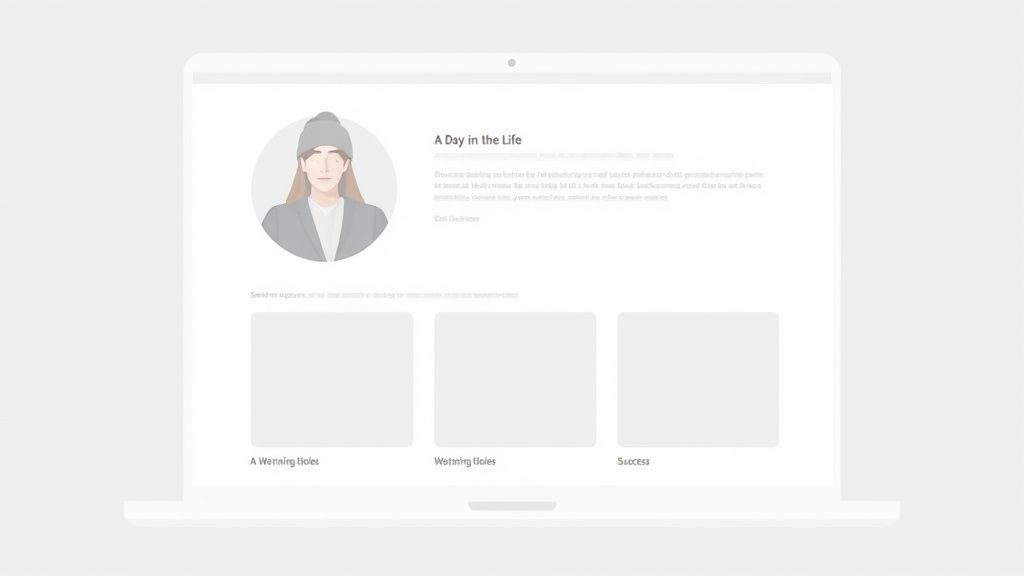
The goal is to distill all that rich data into a scannable, engaging, one-page snapshot. Something anyone in your company can look at and "get" in under five minutes.
Think of it as a movie poster for your customer. It needs to tell a compelling story at a glance. When you do it right, your team will start referring to the persona by name in meetings, asking things like, "Would Sarah the Startup CEO actually care about this feature?" That’s when you know it's working.
Beyond Basic Demographics
A truly functional one-pager goes way beyond the obvious stuff like age and location. While that’s fine for context, the real magic is in the sections that bring your persona's world to life. This is where you build genuine empathy.
To make your persona actionable, you need to include these critical elements:
- A Day in the Life: What does their typical workday look like? Are they buried in spreadsheets, leading team stand-ups, or constantly putting out fires? This context is gold for your product and marketing teams.
- Watering Holes: Get specific. List the exact blogs, podcasts, social media influencers, or industry newsletters they trust. This isn't just a list; it's your future content distribution plan.
- Definition of Success: What does a "win" look like in their role? Is it hitting a revenue target, earning a promotion, or just making their own job less stressful? Align your solution to their aspirations.
- Direct Quotes: Pull one or two powerful quotes directly from your interviews. Nothing communicates a pain point more effectively than hearing it in the customer’s own words.
Tailoring B2B and B2C Templates
The structure of your one-pager will naturally shift depending on whether you're selling to a business or a consumer. Both need to feel human, but their motivations are completely different. A solid grasp of B2B content marketing best practices will help you zero in on the professional drivers that matter.
For a B2B persona, you want to heavily emphasize their professional world—KPIs, team dynamics, and reporting structure. For a B2C persona, you might lean more into lifestyle, personal values, and the emotional triggers behind a purchase.
Putting Your Personas Into Action
Creating your persona one-pager feels like crossing the finish line, but it’s really just the starting gun. The real value is unlocked when you embed these customer stories into the daily rhythm of your business. It’s all about operationalizing empathy so every decision—from ad copy to product features—is made with a clear picture of who you're serving.
This is how you build a truly customer-centric organization. Your personas become the shared language that aligns marketing, sales, and product development around a single, unified vision of the customer.
From Document to Daily Driver
To make your personas stick, you have to actively integrate them into your team's existing workflows. Don't just email the final document and hope for the best. That never works. Instead, introduce them in a team meeting and walk through specific scenarios where they can be applied.
The goal is to make "What would Sarah the Startup CEO think?" a natural, automatic question in your planning sessions.
Here’s how different teams can put them to immediate use:
- Marketing Team: Can finally craft hyper-relevant ad copy that speaks directly to a persona's pain points. Or they can develop blog content that answers the exact questions their ideal buyers are Googling.
- Sales Team: Can tailor their outreach emails and demo scripts to address a persona's known challenges and career goals. This makes the conversation instantly more relevant and less transactional.
- Product Team: Can prioritize new features based on which ones will solve the most significant problems for your core personas, ensuring you build what customers actually need and will pay for.
Real-World Impact and Measurable Results
Let’s get practical. Imagine a fintech company that created a persona for "Freelancer Frank," who struggles with managing inconsistent cash flow. With this insight, the product team prioritizes a feature that automatically sets aside a percentage of every payment for taxes.
At the same time, the marketing team runs a targeted campaign on social platforms where Frank spends his time, with ad copy like, "Stop dreading tax season. We’ll handle the savings for you." This unified approach, guided by a deep understanding of one person's struggle, creates a powerful and resonant customer experience.
The financial impact is undeniable. Businesses that implement buyer personas in their sales process see a 14% increase in client retention and a 19% boost in revenue growth. On top of that, personalization driven by personas is a massive efficiency driver; companies using them in email marketing generate 18 times more revenue than those sending generic broadcasts.
The true test of a good persona is its ability to influence decisions. If it doesn't change how your teams act, it's just a document. Make it a tool for action.
A well-defined persona is a core component of any effective B2B marketing strategy framework. It provides the customer-centric foundation needed for sustainable growth and ensures that every part of your go-to-market plan is grounded in reality, not just internal assumptions about who your customers are and what they care about.
A Few Common Questions About Buyer Personas
Even with a solid framework, a few questions always pop up the first time you sit down to build your personas. Getting these fundamentals right can be the difference between a tool your team actually uses and a document that just gathers dust.
Let's clear up some of the most common sticking points.
How Many Buyer Personas Do I Need?
There’s no magic number here, and I'll take quality over quantity any day of the week. Most B2B tech companies find their sweet spot with three to five core personas. These should represent your most important and distinct customer segments.
Trying to create ten different personas right out of the gate is a classic mistake. It just creates confusion and dilutes your team's focus.
My advice? Start small. Nail one or two incredibly detailed personas for your most valuable customer types first. You can always build more later on. The real goal is to cover the primary motivations driving your audience, not to create unnecessary complexity.
What’s The Difference Between a Buyer Persona and a Target Audience?
This is a big one, and it's surprisingly easy to get them mixed up.
Think of it this way: a target audience is broad and demographic. A buyer persona is sharp, specific, and human.
-
A target audience is a wide description of who you're trying to reach. For example: "male founders of B2B SaaS companies, aged 30-45, located in North America." It tells you who to target.
-
A buyer persona is a much deeper profile of a fictional individual who represents that audience. It digs into their specific goals, daily frustrations, motivations, and the real "why" behind their behavior. This tells you how to connect with them.
A target audience gives you a map, but a buyer persona gives you the turn-by-turn directions. It provides the context and empathy you need to craft messaging that actually lands.
How Often Should I Update My Buyer Personas?
Your personas shouldn't be treated like stone tablets. They’re living documents that need to evolve right alongside your customers, your market, and your business. Customer behaviors are always in flux.
As a general rule, it's a good practice to formally review and refresh your personas at least once a year.
That said, you should pull that review forward if you notice a major shift in your data, see new trends popping up in customer feedback, or after a big product launch or a strategic pivot. The key is to keep your finger on the pulse of your audience and make sure your personas always reflect reality.
Ready to build a go-to-market strategy grounded in a deep understanding of your ideal customer? Value CMO provides fractional CMO services that clarify your ideal customer profile, build a data-driven growth roadmap, and lead the execution of no-fluff plans to scale your B2B tech startup. Learn more about our flexible, outcome-oriented engagements.