
Figuring out when to hire a fractional CMO isn't about jumping on a trend. It's about recognizing that specific moment in your startup’s journey—that feeling you get when your marketing hits a wall and you know you need serious strategic leadership to break through.
You're probably not quite ready for the cost and commitment of a full-time executive, but you can feel the gap widening between your big growth ambitions and your team's ability to execute a cohesive strategy. That feeling? That's your signal.
Reading the Signals: Is It Time for a Fractional CMO?
That feeling of hitting a marketing plateau is a familiar one for so many scaling B2B tech startups. Your team is busy, tasks are getting checked off, but the strategic vision is blurry and growth has flatlined.
This is a calculated decision to solve specific growing pains, not just to follow industry buzz. The demand for fractional leadership has surged for a good reason. Projections show that by 2025, 35% of U.S. businesses will be using fractional roles, and it’s no wonder why. Companies report a 25–35% increase in marketing ROI within the first year of bringing on a fractional CMO, which really highlights the immediate impact they can have on growth and efficiency.
But what does this look like on the ground, in your company? Here are the tell-tale signs.
Your Business Goals Are Disconnected from Marketing
This is the big one. The C-suite is talking about Series A funding and ARR growth, while the marketing team is reporting on social media engagement and blog traffic. There’s no clear, straight line connecting their daily work to revenue. It’s a classic, and frustrating, disconnect.
A fractional CMO steps in to bridge this exact gap. Their first job is to translate those high-level business objectives into a focused, data-driven marketing roadmap that everyone understands and can actually execute against.
I saw this firsthand with a SaaS startup struggling with high churn. Their marketing team was laser-focused on top-of-funnel lead gen, but customers were slipping out the back door just as fast. A fractional CMO came in, dug into the data, and immediately pivoted the strategy to customer marketing and better onboarding campaigns. This directly tackled the retention issue and stabilized their revenue.
This journey—from stagnation to strategic clarity—is a common path for founders.
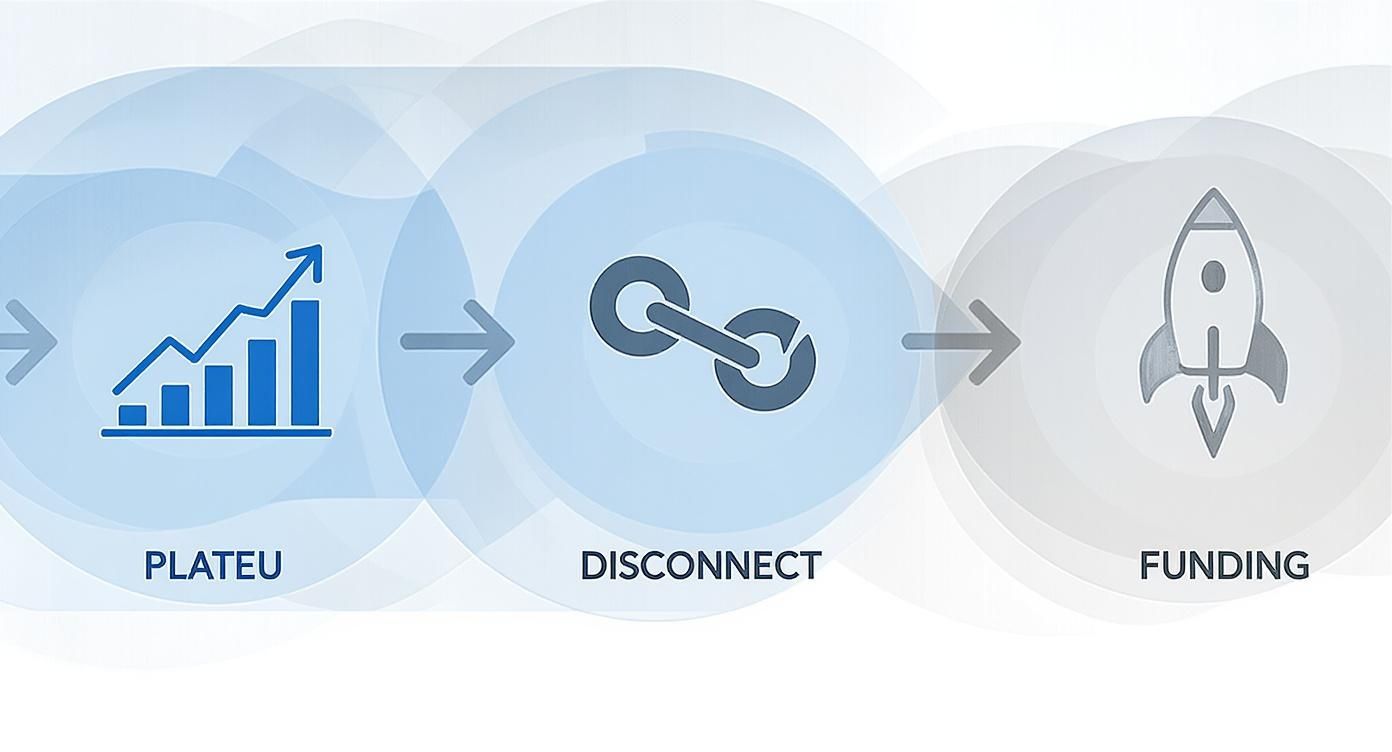
As you can see, these triggers aren't isolated incidents. They are progressive signals pointing toward the need for experienced, flexible leadership.
Your Team Needs a Leader, Not Just a Manager
You might have a talented team of specialists—a great content writer, a sharp social media manager, a digital ads guru—but nobody is actually steering the ship. They’re excellent at their individual jobs but lack the senior experience to build an integrated strategy that drives predictable growth.
This leads to what I call "random acts of marketing." Everyone is busy, but nothing really connects.
A fractional CMO doesn't just manage tasks; they build the machine. They mentor your junior team members, install processes, and create a system where all marketing efforts work together to achieve a common goal.
Hiring a fractional CMO provides the leadership your team needs to level up. They can coach your existing talent, spot skill gaps, and help you build a marketing function that scales with the company, not behind it. For founders who want to dig deeper, it helps to understand precisely what a fractional CMO is and the unique value they bring to the table.
You're Preparing for a Funding Round
Investors don't just put money into a great product; they invest in a credible growth story. When you're gearing up for a fundraising round, you need more than just a hockey-stick projection on a slide. You need a coherent, defensible marketing strategy with the data to back it all up.
A fractional CMO brings instant credibility to the table. They can articulate your go-to-market strategy, detail your customer acquisition model, and present a clear, data-backed plan for scalable growth that will have investors nodding along.
This shows investors you have the senior leadership in place to execute on your vision and use their capital effectively. It’s a massive confidence booster for them and a huge advantage for you.
Defining the Mission for Your Fractional CMO
Before you even think about posting a job description, you need to map out a crystal-clear mission. I'm not talking about listing a few generic tasks. I mean taking a serious look at your startup's biggest hurdles and most promising growth levers. Getting this right from the start is probably the single most important factor in whether this hire succeeds.
Think of it like handing a blueprint to a master builder. Without one, they might construct an impressive building, but it won't be the one you actually need. Your goal here is to craft a focused scope of work that not only attracts a true leader but also tees them up to deliver results from day one.
From Vague Goals to a Concrete Plan
First things first: let's translate your big-picture business goals into tangible marketing objectives. Simply saying "we need more leads" is a non-starter. Any fractional CMO worth their salt will immediately fire back with, "What kind of leads? At what cost? To hit what specific revenue target?"
You have to get specific. The mission should revolve around your top 3-5 marketing priorities for the next six months.
Let’s look at a few real-world scenarios:
- For a Seed-Stage SaaS: Your mission might be to validate the go-to-market strategy. This means nailing down the Ideal Customer Profile (ICP), building a foundational messaging framework that actually resonates, and firing up the first repeatable lead-gen channel.
- For a Series A Scale-Up: The mission is all about scaling demand. This could look like hiring a leader to optimize a $50k monthly ad spend, slash the Customer Acquisition Cost (CAC) by 15%, and build a predictable pipeline to support a $5M new ARR goal.
- For a B2B Tech Firm Entering a New Market: The mission is to successfully launch in the UK. This involves adapting positioning for a new audience, creating a localized content plan, and generating the first 100 qualified opportunities in that region within two quarters.
See the difference? Each one is specific, measurable, and has a timeline. This is the level of detail an experienced fractional CMO expects. It signals that you’ve done your homework and are ready for a strategic partner, not just another marketing manager.
Turning Priorities into a Scope of Work
With your core mission defined, the next step is breaking it down into a clear scope of work. This document is your "blueprint" for the entire engagement. It lays out the responsibilities, the expected outcomes, and the metrics you both agree matter most.
For many tech companies, the primary mission is to build a scalable growth engine. To get a feel for what that actually involves, it helps to explore some proven SaaS growth strategies that a new leader could spearhead. This gives you context for the kinds of initiatives they might recommend.
A solid scope of work answers three key questions.
1. What are the core responsibilities?
This is about defining their sandbox. It’s not a laundry list of tasks but a clear line on ownership.
- Developing and owning the marketing roadmap
- Managing the marketing budget and reporting on ROI
- Leading and mentoring the existing marketing team (if any)
- Selecting and managing marketing tech and agency partners
2. What are the expected outcomes?
These are the tangible results you're paying for.
- A documented and validated go-to-market strategy
- A marketing pipeline that consistently delivers 50+ SQLs per month
- A fully implemented and functional marketing automation and analytics stack
3. How will we measure success?
Define the Key Performance Indicators (KPIs) before they start. No ambiguity.
- Metric: Customer Acquisition Cost (CAC)
- Metric: Marketing Originated Pipeline (in dollars)
- Metric: Lead-to-Customer Conversion Rate
By getting this level of clarity before you hire, you’re doing more than just writing a job post. You’re building the foundation for a successful, results-driven partnership and ensuring total alignment from the very first conversation.
Finding and Vetting Top-Tier Marketing Leaders
Once you have a clear mission, it’s time to find the right person for the job. But here’s the thing: elite fractional CMOs—the ones who can actually move the needle for a B2B tech startup—aren’t scrolling through standard job boards.
Finding these leaders requires a more targeted, strategic approach. Think of it less like posting a job and more like sourcing an executive partner. You’re looking for a very specific blend of hands-on startup experience, strategic vision, and a proven track record of growth in an environment just like yours. The search itself is the first filter.
Where to Find High-Caliber Talent
Forget LinkedIn Easy Apply. The best candidates come from trusted networks and specialized platforms where top-tier independent professionals gather. Your goal is to tap into curated talent pools, not sift through thousands of mismatched resumes.
Here are the most effective channels I've seen work time and again:
- VC and Investor Networks: This is your highest-value channel, period. Your investors have a vested interest in your success and a network of proven operators. Ask them for direct introductions to fractional leaders who have delivered results for other portfolio companies.
- Specialized Executive Marketplaces: Certain platforms exist specifically to vet and connect startups with fractional executives. These aren't gig sites; they are curated communities of experienced leaders looking for meaningful, part-time leadership roles.
- Boutique Consulting Firms and CMO Collectives: Many top fractional CMOs operate within small, specialized firms or are part of exclusive collectives. These groups often focus on specific industries, like B2B SaaS, and offer a roster of pre-vetted talent.
The most powerful referrals come from other founders who have successfully worked with a fractional CMO. A recommendation from someone who has been in your shoes is worth its weight in gold.
The rise of fractional leadership means more companies are accessing this flexible expertise. It's especially common in technology and healthcare, where agile strategies are key. This model allows businesses to engage senior talent for specific projects, like a product launch or mentoring an in-house team, making it a smart way to get more from your marketing spend. You can discover more insights about fractional CMO demand on cnvcmo.com.
Digging Deeper Than the Resume
Once you have a shortlist of candidates, the real work begins. Vetting a fractional CMO is fundamentally different from hiring a full-time employee. You’re not just evaluating past titles; you’re assessing their ability to create an immediate impact in your specific context.
Your vetting process should be laser-focused on one thing: relevant proof of performance. Have they solved the exact problem you’re facing for a company at a similar stage and size?
A great way to structure this is to move beyond generic questions. Arm yourself with situational and strategic questions that force them to show you, not just tell you.
Killer Interview Questions to Ask:
- "Walk me through a time you built a marketing engine from scratch on a tight budget. What were the first 90 days like?"
- "Looking at our company, what would your 30-60-90 day plan likely focus on? What immediate opportunities or red flags do you see?"
- "Tell me about a marketing strategy you implemented that failed. What did you learn, and how did you pivot?"
The answers to these questions reveal their thought process, their comfort with ambiguity, and whether they have a bias for action. For additional guidance on structuring your interview process, our complete CMO hiring guide for founders offers more in-depth tips.
The Non-Negotiable Final Step
Finally, the most critical part of your due diligence is talking to founders they’ve previously worked with. This is non-negotiable.
A candidate's hand-picked references will always be positive. But a frank, off-the-record conversation with a former client or CEO will give you the unvarnished truth.
Ask these founders direct questions about the fractional CMO’s impact, leadership style, and how they integrated with the team. You want to understand their true contribution beyond the polished metrics in their case studies. This final step separates the great consultants from the true strategic partners who can help you build a valuable company. When evaluating top-tier marketing leadership, it's also helpful to have a clear view of all your options, including understanding marketing agency services.
Structuring an Engagement That Drives Results
Finding a great fractional CMO is only half the battle. The real make-or-break moment comes when you structure the engagement itself. A well-defined agreement isn't just a legal formality; it's the shared blueprint that aligns expectations and empowers your new marketing leader to hit the ground running.

This isn’t about micromanagement. It’s about building a clear framework around the critical pieces: compensation, time, communication, and the legal details. Nail this, and you create an environment where everyone is focused on one thing—driving real business results.
Aligning on Compensation and Time
First things first: the money and the clock. These two are always linked, and getting them right means balancing your budget with your most urgent strategic priorities. Vague commitments here are a recipe for misaligned expectations and frustration down the road.
Most fractional CMO engagements fall into a couple of common buckets:
- Monthly Retainer: This is the go-to model for ongoing strategic leadership. You pay a flat fee each month for a specific number of hours or days. It's simple and predictable.
- Project-Based Fee: Got a specific, one-off initiative like a product launch or a major rebrand? This model is perfect. You agree on a fixed price for a clearly defined scope and outcome.
So, what should you expect to pay? The average monthly compensation for a fractional CMO in the United States is typically $10,000 to $20,000. In Europe, those rates usually fall between $7,000 and $15,000 a month. Over in India, the range is closer to $3,000 to $7,000 per month. These models give you the flexibility to choose an engagement level that makes sense for your stage. You can learn more about fractional CMO key trends and future insights on cnvcmo.com.
Beyond the cost, get super explicit about the time commitment. Is it 10 hours a week? Two full days? Whatever it is, define what that time is for. The goal is to ensure their brainpower is focused on high-impact activities, not just "being available."
Establishing a Communication Rhythm
Clear, consistent communication is the lifeblood of any successful fractional partnership. Since your new leader isn't in the office five days a week, you need a deliberate system to keep everyone in sync.
This isn't about packing their calendar with endless meetings. It's about creating a predictable and efficient cadence that keeps the team informed and the strategy moving forward.
A solid communication plan usually includes:
- A Weekly Tactical Sync: A tight, 30-minute meeting to review progress from the past week, tackle immediate roadblocks, and lock in priorities for the week ahead. Keep it data-driven and action-oriented.
- A Monthly Performance Review: A deeper dive to measure progress against the big-picture KPIs. This is where you zoom out, assess what's working (and what's not), and decide if any strategic pivots are necessary.
- Asynchronous Updates: A dedicated Slack channel or project management tool is perfect for quick questions and daily check-ins. This cuts down on email noise and keeps momentum going between formal meetings.
The right communication rhythm ensures your fractional CMO is deeply integrated into your team, not just a consultant dialing in. It makes them a true part of the leadership team, even on a part-time schedule.
Nailing the Contract Details
Finally, don't just skim the contract. This document protects both you and your fractional CMO, setting clear and professional boundaries for the entire relationship. Your lawyer should always give it a final review, but there are a few clauses you need to personally pay close attention to.
- Intellectual Property (IP): This is non-negotiable. The agreement has to state, in no uncertain terms, that all work created for your company—strategies, content, campaign assets, everything—is 100% owned by your company.
- Confidentiality: Your fractional CMO will be privy to sensitive business data, so a rock-solid non-disclosure agreement (NDA) is essential to ensure that information stays protected.
- Exit Clause: What happens if things just don’t work out? A clear termination clause, often with a 30-day notice period, allows both sides to part ways professionally without a messy, drawn-out disengagement.
By thinking through these elements upfront, you’re not just signing a contract—you’re building a foundation for a partnership that can truly move the needle for your startup.
Setting Your New Fractional CMO Up for Success
You’ve done the hard work, vetted the candidates, and signed the contract. But don't pop the champagne just yet. How you bring your new fractional CMO into the fold during the first 30 days will make or break the entire engagement.
Think of it this way: you hired a brilliant architect. Now you need to hand them the blueprints, the surveyor's report, and the keys to the site. A smooth onboarding isn't just a nice-to-have; it's what separates a thriving partnership from a frustrating false start.
The Day-One Essentials Checklist
On day one, your fractional CMO’s main job is information overload—by design. Your job is to make that information dead simple to find. Don't force them to spend their first week hunting down logins or chasing access permissions.
This isn't just about good organization. It signals that you value their time and are ready for a real strategic partnership. Get a welcome packet ready with everything they'll need to hit the ground running.
Here’s a quick list of what they'll need immediately:
- Analytics and Reporting: Full admin access to Google Analytics, Search Console, and any other data dashboards you live by.
- CRM and Automation: A seat in your CRM (like HubSpot or Salesforce) and any marketing automation tools.
- Ad Platforms: Logins for Google Ads, LinkedIn Campaign Manager, or wherever you're spending money.
- Customer Insights: Dump all your existing customer research, buyer personas, churn data, and any Voice of the Customer (VoC) feedback you have.
- Past Initiatives: Give them the raw, honest truth about past marketing campaigns—what worked, what bombed, and what you learned from the wreckage.
The goal here is to give them a complete, unfiltered look at your marketing history. The faster they can diagnose the real challenges and spot the hidden opportunities, the faster they can start delivering high-impact wins.
Building Cross-Functional Bridges
A fractional CMO never succeeds in a silo. Their strategy will ripple across sales, product, and maybe even engineering. That's why making strategic introductions is more than a formality—it’s how you build the internal alignment needed for real growth to happen.
Remember, the average annual cost for a full-time CMO in 2025 can be anywhere from $325,000 to $455,000 with salary and benefits. A fractional CMO typically runs between $96,000 and $120,000 per year. That cost difference means you're buying their strategic brainpower, so make sure their time is spent on strategy, not navigating internal politics. For more on this, check out the fractional CMO cost and ROI data on 360integralmarketing.com.
Get dedicated 1-on-1s on the calendar with the heads of:
- Sales: To dig into the sales process, lead quality complaints, and the health of the current pipeline.
- Product: For a deep dive into the product roadmap, competitive landscape, and what truly makes you different.
- Engineering: To talk through any technical marketing needs, website performance issues, or data integrations.
These conversations give your new leader the 360-degree view they need to craft a strategy the whole company can rally behind. It's also critical for them to understand the existing B2B marketing team structure to quickly identify strengths, weaknesses, and resource gaps.
The Kickoff Workshop Blueprint
After they’ve had a few days to digest everything, it’s time for a formal kickoff workshop. This is not just another meeting. It's a dedicated session to lock in goals, clarify roles, and establish the rhythm of your collaboration.
A solid workshop agenda should cover these five points:
- Review Business Goals: Reiterate the big-picture objectives you hired them to help you hit.
- Share Initial Diagnosis: Let them take the floor and share what they've uncovered in their first few days.
- Set 90-Day Priorities: Work together to agree on the top 1-3 priorities for the first quarter.
- Define Success: Nail down the specific KPIs you'll use to measure their impact. No fuzzy metrics allowed.
- Establish a Cadence: Agree on the schedule for weekly syncs, monthly reviews, and the best channels for communication (e.g., Slack, email).
This workshop gets everyone on the same page, armed with a shared mission and a clear plan of attack. It empowers your fractional CMO to shift from analysis to action with the full backing of your team.
Common Questions About Hiring a Fractional CMO
Bringing on a fractional CMO is a major move. It's not just another hire; it’s a strategic bet on your company's growth. It’s only natural to have a few questions before you commit. Let's get into the most common ones I hear from founders so you can move forward with total clarity.

How Much Does a Fractional CMO Actually Cost?
This is usually the first question on everyone's mind. Costs vary based on experience and the time commitment, but you can expect to invest anywhere from $8,000 to $20,000 per month for a high-caliber fractional CMO in the US.
That fee typically covers anywhere from 10 hours a week to a couple of dedicated days. The smart way to look at this number is to compare it against the fully loaded cost of a full-time CMO, which can easily clear $350,000 a year once you add up salary, bonuses, benefits, and equity.
The key is to define the mission first. Once you know exactly what you need them to accomplish, you can find a leader whose engagement model fits your budget.
What Is the Difference Between a Fractional CMO and a Marketing Consultant?
This is a critical distinction, and one that trips up a lot of founders. A consultant usually drops in for a specific project—they might build a strategy deck, hand it over, and their work is done. An agency is an external team you hire to execute specific tasks, like running your Google Ads or writing blog posts.
A fractional CMO operates on a completely different level. They become a real, accountable part of your leadership team.
They don't just advise; they own the marketing strategy, manage your team (or help you build one), are responsible for hitting targets, and contribute to high-level business decisions. They function as your head of marketing, just on a part-time basis.
This model is especially common in venture-backed and private equity-backed companies where bringing in proven, scalable expertise quickly is a huge advantage. As more businesses see the value, the global market for fractional executives is only going to grow. You can discover more insights about the fractional executive market on 360integralmarketing.com.
How Do I Make Sure a Fractional CMO Integrates with My Team?
Great integration doesn’t start on day one—it starts in the interview process. You need to vet for leadership and communication skills, not just a sharp marketing mind. Once they’re on board, a structured and intentional onboarding process is non-negotiable.
Here are a few things you can do to make them feel like part of the team immediately:
- Be Explicit About Their Role: Announce their arrival to the whole company. Be crystal clear about what they're responsible for and the authority they have.
- Schedule Key One-on-Ones: Get them in a room with the heads of Sales, Product, and Finance right away. This helps them quickly grasp the internal dynamics.
- Establish Communication Rhythms: Plug them into your existing leadership meetings. They should be leading the weekly marketing sync and sitting in on executive huddles.
The goal here is to remove friction so they can get up to speed fast and your team sees them as a strategic partner, not just a temporary outsider.
What Are the Biggest Mistakes Startups Make When Hiring a Fractional CMO?
Hiring a fractional CMO can be a game-changer, but a few common mistakes can derail the whole thing. Knowing what they are ahead of time makes all the difference.
The single biggest mistake is having vague expectations. If you haven't defined what success looks like in the first 90 days, you have no real way to measure their impact or hold them accountable.
Another classic trap is treating them like a vendor instead of an executive. For them to be effective, they need full access to your data, your people, and your leadership discussions. If you hold back information, you’re tying their hands.
Here are a few other common errors I see:
- Hiring for the Wrong Stage: A CMO from a huge enterprise probably doesn't have the scrappy, hands-on DNA a lean startup needs. Always screen for relevant stage experience.
- Expecting a One-Person Army: Don't hire them thinking they’ll be a one-person marketing department executing every little task. Their job is strategy and leadership. They're there to build and guide the marketing engine, not be the entire engine themselves.
Ready to bring in senior marketing leadership without the full-time overhead? Value CMO provides B2B tech startups with the strategic guidance and hands-on execution needed to build a predictable growth engine. https://valuecmo.com