Inbound marketing isn’t about yelling at people with ads. It's about pulling potential customers in with genuinely useful content and experiences. For a B2B tech startup, that means creating resources that your ideal buyers find naturally, building real trust, and generating leads without draining your bank account.
Why Inbound Is a Startup’s Secret Weapon for Growth
Let's be real. As a founder, your resources are tight, but your growth targets are anything but. This is where inbound marketing becomes your most valuable player, building a predictable pipeline without a massive budget. It completely flips the old-school sales model on its head.
Instead of burning cash on outbound tactics that just annoy prospects, you become a magnet for your Ideal Customer Profile (ICP). How? By consistently showing up with solutions to their problems, often before they even know they need your product.
The Shift from Interruption to Attraction
Think about how you buy things. When you need a solution, do you sit by the phone waiting for a cold call, or do you head straight to Google? Your future customers are doing the exact same thing. They're actively searching for answers, and a smart inbound strategy makes sure they find you. That’s how you start building trust from the very first click.
The playbook has been proven time and time again. B2B tech companies that trade expensive ads with diminishing returns for a sustainable flow of inbound leads almost always win in the long run.
The core idea is simple: Stop shouting into the void and start becoming the go-to resource your customers are already looking for. This is how you build a brand and a sales pipeline at the same time.
Building a Foundation for Predictable Success
Think of this guide as your playbook—no fluff, just actionable steps to build an inbound machine that actually works for your startup. The benefits are clear and easy to see:
- Lower Customer Acquisition Cost (CAC): Inbound leads cost 62% less on average than outbound leads. That’s precious cash you can pour back into your product or your team.
- Higher Quality Leads: When prospects find you on their own terms, they’re already educated about their problem and motivated to solve it. The sales conversation starts ten steps ahead.
- Long-Term, Compounding ROI: A blog post or guide you write today can keep generating qualified leads for years to come. It's an asset that actually appreciates over time.
It’s time to stop marketing randomly and start building a system that attracts, engages, and converts.
Building Your Foundation For Sustainable Leads
Jumping straight into writing blog posts without a clear plan is the single biggest mistake I see startups make. It's like trying to build a house without a blueprint. You might end up with something, but it won’t be strong, efficient, or what you actually need.
Effective inbound marketing lead generation all starts with a rock-solid foundation. This isn't just about ticking boxes; it's the strategic core that will guide every piece of content you create and every channel you use. Let's get practical.
Define Who You Are Actually Selling To
You've heard of the Ideal Customer Profile (ICP) and buyer personas. Too often, these become abstract documents that just gather dust. For a lean startup, they have to be active, living tools that shape every single marketing decision you make.
Your ICP isn't just a company size or industry. It’s about zeroing in on the businesses that get the most value from your solution and are most profitable for you.
Think of it this way: the ICP is the company, and the personas are the people inside it.
- Ideal Customer Profile (ICP): This is your perfect-fit company. What industry are they in? How many employees do they have? What tech do they already use? What specific business pain are they struggling with that you solve perfectly?
- Buyer Personas: These are the key individuals you need to win over. You might have a "Technical Tom" (the end-user), a "Financial Fiona" (the budget holder), and an "Executive Eric" (the final decision-maker). Each one has different goals, challenges, and questions.
This simple flow chart nails the process your foundation supports: attracting the right people, building their trust, and converting them into leads.
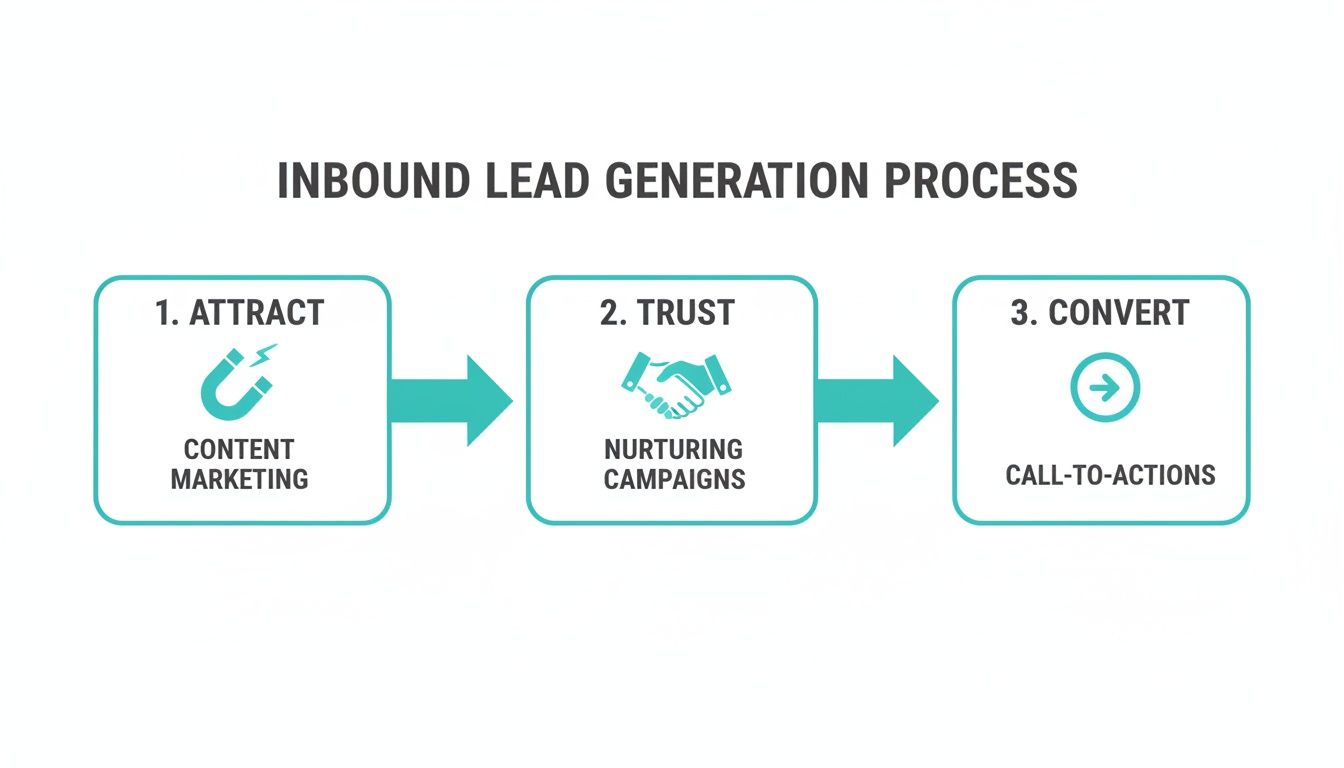
Without a clear ICP, your "Attract" stage pulls in all sorts of irrelevant traffic, making the "Trust" and "Convert" stages nearly impossible. If you need to go deeper, check out our guide on how to create buyer personas that actually work.
Map The Buyer’s Journey and Set Real Goals
Once you know who you're talking to, you have to understand how they buy. The B2B buyer’s journey isn't a straight line, but it generally follows a predictable path. Mapping this out is how you create the right content at the right time and set meaningful goals for each stage.
Your goal isn't just to "get leads." It's to attract qualified visitors, convert them into marketing qualified leads (MQLs), and nurture them until they become sales qualified leads (SQLs) who are actually ready for a conversation.
Let’s break down how to connect your tactics to this journey. We’re moving from fuzzy ideas to a measurable system that proves your ROI.
Mapping Inbound Tactics to the B2B Buyer's Journey
Here's a quick cheat sheet for connecting the dots between what your prospects need and what your marketing should deliver at each step.
| Funnel Stage | Customer Goal | Key Inbound Tactic | Primary Metric |
|---|---|---|---|
| Awareness (Top of Funnel) | "I have a problem, but I don’t know what the solution is yet." | SEO-driven blog posts, educational webinars, social media content | Website Traffic, Keyword Rankings |
| Consideration (Middle of Funnel) | "I'm researching different ways to solve my problem." | In-depth guides, case studies, comparison checklists | Gated Content Downloads, MQLs |
| Decision (Bottom of Funnel) | "I’m ready to choose a specific solution or vendor." | Product demos, free trials, pricing page visits, consultations | Demo Requests, SQLs, Free Trial Sign-ups |
By defining KPIs for each stage, you can finally measure what truly matters.
If your website traffic is soaring but you’re not getting any MQLs, you know there’s a problem in the middle of your funnel. Maybe your gated content isn't compelling enough, or your call-to-action is a bit weak.
This structured approach transforms inbound from a creative guessing game into a predictable engine for growth. It makes sure every action you take is deliberately designed to move your ideal customer one step closer to a sale.
Your Content Engine for a Predictable Lead Flow
Content is the fuel for your inbound machine, but just "making content" is a great way to burn through cash and energy. As a startup, every hour and dollar is precious. You can't just throw things at the wall and hope something sticks.
The real goal is to build a content engine—a repeatable process for creating assets that pull in your Ideal Customer Profile (ICP) and turn them into qualified leads. This isn't about chasing viral hits; it's about building a predictable pipeline of prospects who are already out there looking for you.
Here’s why it works so well: content marketing generates three times more leads than outbound marketing at 62% lower costs. For a lean startup, that’s a game-changer. Better yet, long-form blogs tend to generate far more leads than shorter posts because they establish your authority right away.
Brainstorming Content That Actually Converts
The best content ideas don’t just pop out of thin air. They come from knowing your ICP’s biggest headaches, challenges, and questions inside and out. Your job is to be the most helpful resource they can possibly find when they’re feeling stuck.
A great place to start is by mapping your ideas to the buyer's journey we covered earlier.
- Top of Funnel (Awareness): What are the broad problems your ICP is Googling? They might not even know your product category exists yet. Think "how-to" guides, "what is X" articles, and reports on industry trends.
- Middle of Funnel (Consideration): Now they’re aware of solutions and are comparing different approaches. This is your chance to shine with in-depth guides, case studies, comparison checklists, and webinars that show why your way is best.
- Bottom of Funnel (Decision): They're close to pulling the trigger. This content needs to build trust and make the decision feel easy. Product demos, implementation guides, and detailed FAQs work wonders here.
Your content strategy should directly answer the questions your sales team gets every single day. If they hear a question three times, you need a piece of content that answers it once and for all.
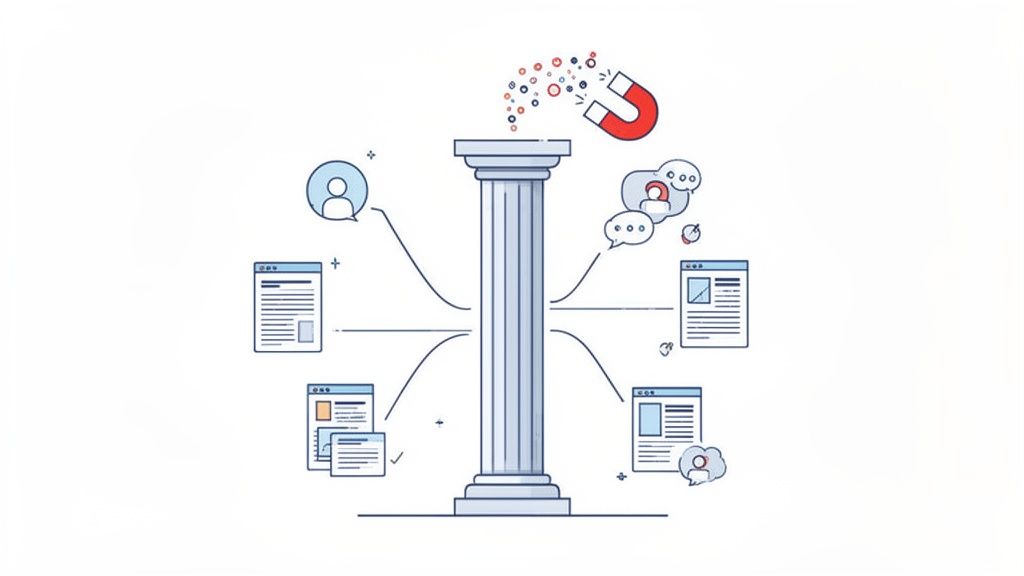
The Pillar-and-Cluster Model: A B2B Game-Changer
Random blog posts don’t build authority. To really win at inbound marketing lead generation, you need a structure that tells search engines you're an expert on a specific topic. That’s where the pillar-and-cluster model comes in.
It’s a simple but incredibly powerful SEO strategy for organizing your content.
- Pillar Page: A long, comprehensive guide on a core topic that’s central to your business. For a SaaS company, this might be something like "The Ultimate Guide to Project Management for Remote Teams." It covers the topic from a high level.
- Cluster Content: These are shorter, more specific articles that all link back to the pillar page. Examples could be "5 Best Collaboration Tools for Remote PMs" or "How to Run an Effective Remote Sprint Planning Meeting."
This structure signals to Google that you have deep expertise on the pillar topic, which helps your entire cluster of content rank higher. For a deeper dive, these B2B content marketing best practices will help you execute this model flawlessly.
Creating Lead Magnets People Actually Want
Traffic is nice, but leads are what pay the bills. A lead magnet is what turns an anonymous visitor into a real contact. It's a simple value exchange: you offer a high-value resource, and they give you their email address in return.
The key phrase here is "high-value." A generic, five-page PDF just isn't going to cut it anymore. Your lead magnet needs to be so useful that your ICP would happily pay for it if you asked them to.
Here are a few lead magnet ideas that absolutely kill it in B2B tech:
- Checklists & Templates: Actionable tools they can use right away, like a "Go-to-Market Launch Checklist" or a "Quarterly Business Review Template."
- In-depth Guides & Whitepapers: A downloadable version of your pillar page or a deep dive on a niche topic backed by original data.
- Webinars & On-Demand Recordings: A live or recorded session that teaches a specific skill while showcasing your expertise.
- Free Tools or Calculators: An interactive tool that solves a small but nagging problem, like an "ROI Calculator" for your software.
To get the most mileage out of your hard work, lean into smart content repurposing strategies. A single webinar can be chopped up into a dozen blog posts, social media clips, and a downloadable guide. That’s how you keep the content engine humming efficiently without constantly reinventing the wheel.
Activating Channels To Reach Your Ideal Customers
Brilliant content is only half the battle. Even the world's best guide is useless if your Ideal Customer Profile (ICP) never sees it. This next step is all about getting your message in front of the right people by activating the right channels—without stretching your small team too thin.
For a B2B tech startup, this means focus, not volume.
Instead of trying to be everywhere at once, we’re going to zero in on the “big three” channels that consistently deliver for B2B tech: Organic Search (SEO), targeted Paid Media, and high-value Referral traffic.
The real magic happens when these channels stop working in silos and start boosting each other. That’s how you build a resilient system for inbound marketing lead generation.
Winning With Organic Search and On-Page SEO
For a startup, organic search isn't just another marketing channel; it's the ultimate long-term asset. A single, well-ranking article can generate qualified leads for years, delivering a compounding return on your initial time investment.
The best part? You don't need to be a technical wizard to get started.
Basic on-page SEO is really just about making it incredibly easy for search engines like Google to understand what your content is about and why it's so valuable. The payoff is huge—SEO delivers a 14.6% lead close rate, which is a massive ROI for any startup.
Here are a few non-negotiable on-page SEO tips anyone can put into action today:
- Keyword in the Title Tag: Your main keyword should appear in the page's title, preferably near the beginning. This is one of the strongest signals you can send.
- Clear Meta Description: While it's not a direct ranking factor, a compelling meta description acts like an ad in the search results, tempting your ICP to click on your link instead of a competitor's.
- Use H2s and H3s: Break up your content with clear, descriptive subheadings. This makes it easier for people to read and helps search engines grasp the structure and importance of your information.
- Internal Linking: Link from your new article to other relevant posts on your site. This helps spread authority around your site and keeps visitors engaged and clicking for longer.
Think of on-page SEO as setting the table for a dinner party. It ensures everything is in its right place so your guests—both search engines and human readers—can easily find and enjoy what you’ve prepared.
Precision Targeting With Paid Media
Paid media, especially on platforms like LinkedIn, is your accelerator. While SEO builds momentum over time, paid campaigns can deliver targeted traffic and leads almost instantly.
The key is to use it for surgical precision, not just broad brand awareness. Forget vanity metrics like impressions; we're focused on getting your best content right in front of your exact ICP. With LinkedIn, you can target people by job title, company size, industry, and even specific skills—it’s incredibly powerful for B2B.
Imagine this real-world scenario:
You’ve just published an in-depth guide on "How AI is Optimizing Logistics for Manufacturing Firms." Instead of waiting for it to rank organically, you run a targeted LinkedIn ad campaign.
- Audience: You target "Operations Managers" and "Supply Chain Directors" at manufacturing companies with 200-1000 employees.
- Ad Creative: You use a simple, direct ad that highlights the key benefit: "Cut your shipping costs by 15% with these AI strategies."
- Call-to-Action: The ad links directly to a landing page where they can download the guide in exchange for their email.
This isn't about blasting your message to everyone. It's about a highly specific offer to a highly specific audience, turning your content into a direct lead generation tool. It's no wonder that 89% of B2B marketers use LinkedIn for this very reason—it just works.
Building a Simple Referral and Partnership Program
The warmest, highest-quality leads often come from referrals. These are prospects who show up with a built-in layer of trust because someone they know and respect sent them your way. As a startup, you can’t afford to leave this on the table.
Building a referral program doesn't have to be complicated. It can start with a simple, proactive outreach plan.
- Happy Customers: Reach out to your best customers. Ask if they know anyone else in their network who faces similar challenges. Offer a small incentive, like a gift card or a discount, for any referral that becomes a customer.
- Complementary Partners: Find non-competing businesses that serve the same ICP. A B2B fintech company could partner with a small business accounting firm. You can co-host a webinar, write guest posts on each other's blogs, or create a simple referral agreement.
The goal is to formalize word-of-mouth, turning your network and happy clients into an active, predictable source of new business.
Each of these three channels—organic, paid, and referral—plays a distinct but complementary role. Your SEO efforts create long-term assets, paid media provides immediate traffic to those assets, and a referral program brings in high-trust leads to round out your strategy.
How To Automate And Scale Your Inbound Machine
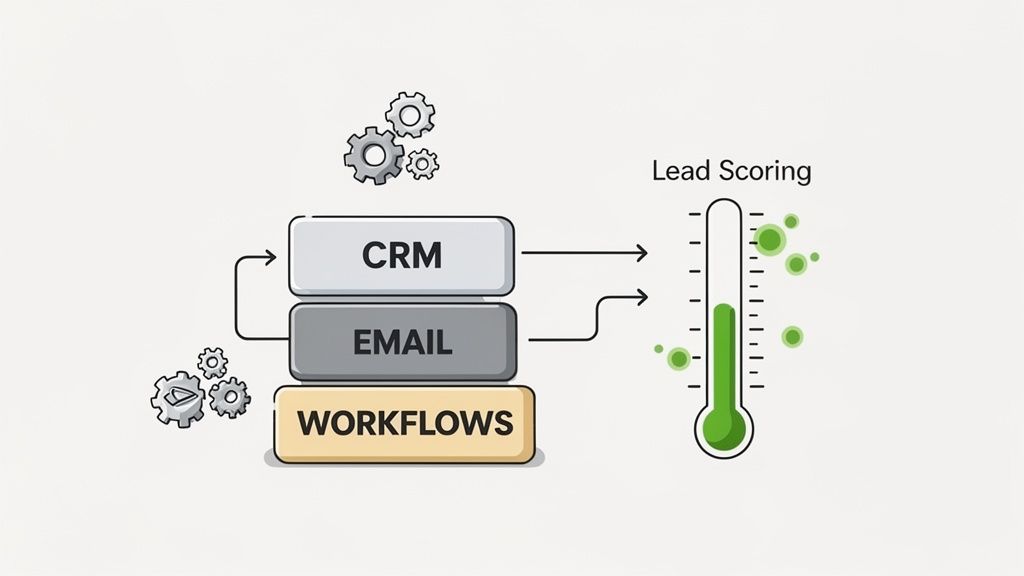
As your content engine starts humming, you'll hit a great problem: a steady trickle of new leads. But this is exactly where manual work—like tracking leads in a spreadsheet or sending follow-up emails one by one—goes from manageable to a massive bottleneck.
This is the point where a smart, lean tech stack turns all that hard work into a scalable system. Automation isn't about sinking cash into expensive, enterprise-level software you don’t need. It’s about picking the right tools to do more with less, so no lead ever slips through the cracks.
Marketing automation is a huge accelerant for inbound marketing lead generation, turning casual website visitors into real revenue. The data is clear: 80% of users see an increase in leads after adopting automation, and nurtured leads are known to make 50% larger purchases.
For a fast-moving B2B tech firm, speed is everything. Responding to a signal from an inbound lead within five minutes can boost conversions by a factor of nine. That’s the kind of efficiency that wins deals.
Building Your Starter Tech Stack
You don’t need a dozen different tools to get going. A simple, integrated stack is far more powerful than a messy collection of disconnected apps. The goal here is to have a single source of truth for all your customer data.
For a B2B startup, these are the three non-negotiables:
- CRM (Customer Relationship Management): This is your command center. It’s where every contact, interaction, and deal stage lives. A free CRM from a provider like HubSpot is the perfect place to start.
- Email Marketing Platform: This is what handles your newsletters, broadcasts, and—most importantly—automated email sequences. Many CRMs have this built-in, but dedicated tools like Mailchimp or ConvertKit integrate easily.
- Landing Page Builder: You need a dead-simple way to create pages for your lead magnets without having to bug a developer. Tools like Leadpages or the native functionality in your CRM are perfect for this.
These three pieces work together to capture, store, and talk to your leads automatically.
Setting Up Basic Lead Nurturing Workflows
A lead nurturing workflow is just a series of automated emails designed to build a relationship with a new prospect. Instead of hitting them with a sales pitch right away, you offer more value, build trust, and gently guide them along their buying journey.
Let's say someone downloads your "Ultimate Guide to Project Management for Remote Teams." You can set up a simple, three-email sequence that runs all on its own:
- Email 1 (Immediate): Delivers the guide and says thanks. It’s a simple, helpful first touch.
- Email 2 (2 Days Later): Follows up with a related blog post, like "5 Common Mistakes in Remote Project Management." This keeps you top-of-mind by providing even more value.
- Email 3 (4 Days Later): Offers a case study showing how a similar company crushed their goals. This nudges them from just learning to seeing a solution in action.
This sequence works 24/7, making sure every new lead gets a consistent, valuable experience. If you're ready to dive in, you can learn more about how to implement marketing automation with a no-fluff, practical approach.
A Simple Lead Scoring Model for Startups
Let's be honest: not all leads are created equal. Lead scoring is how you separate the window shoppers from the sales-ready prospects. It’s a system that assigns points to leads based on who they are (demographics) and what they do (their behavior on your site).
This system stops your sales team from wasting time on dead-end leads and helps your marketing team understand what a "good" lead actually looks like.
A lead score is a signal. It tells you when a prospect has raised their hand high enough to warrant a personal conversation. It’s the critical handoff point between marketing and sales.
Here’s a simple model you can build right inside your CRM:
| Attribute or Action | Points Awarded | Reasoning |
|---|---|---|
| Job Title | +20 | Their title matches one of your buyer personas (e.g., "Director of Operations"). |
| Company Size | +15 | The company fits your Ideal Customer Profile (e.g., 50-250 employees). |
| Downloaded a Guide | +10 | Shows they're interested and doing research. |
| Visited Pricing Page | +25 | This is a strong buying signal; they're actively evaluating solutions. |
| Requested a Demo | +50 | The highest-intent action possible. They are ready to talk, period. |
Once a lead hits a certain score—say, 75 points—they get flagged as a Marketing Qualified Lead (MQL). An alert is automatically sent to your sales team to follow up. This creates a smooth, data-driven handoff that your sales reps will absolutely love. For those on HubSpot, using advanced AI actions for HubSpot leads can make this process even sharper.
Answering Your Top Inbound Marketing Questions
Even with a playbook in hand, diving into inbound marketing for the first time brings up a lot of questions. As a founder, you need straight answers to keep your team moving forward. Let's tackle some of the most common hurdles B2B startups face when firing up their inbound engine.
One of the first questions is always, "How long until I see results?" It's a fair question when every dollar and every hour counts. The truth is, inbound is a long-term asset, not a short-term hack. While you might see some early wins from smart content promotion, it usually takes 4 to 6 months of steady work to build meaningful organic traffic and a predictable flow of leads.
The key word there is steady. Publishing one killer blog post and then going dark for two months just won't cut it. Real success comes from consistently building your library of helpful content, which creates a powerful compounding effect over time.
How Much Should I Budget for Inbound?
Unlike with paid ads, the biggest investment in inbound is often talent and time, not just direct ad spend. Your budget really depends on whether you're creating content in-house or bringing in freelancers or an agency.
For a lean startup, a realistic starting point might look something like this:
- Content Creation: This is your biggest variable. If you're doing the writing, the cost is your time. If you hire a good freelance writer, budget anywhere from $300 to $800+ for a single high-quality, long-form article.
- Essential Software: A basic stack—CRM, email marketing, landing page builder—can often start for free or run just a few hundred dollars a month.
- Content Promotion: I always recommend setting aside a small monthly budget ($500-$1000) to promote your best content on platforms like LinkedIn. This gets it in front of your ICP right away instead of having to wait for Google to catch up.
Why Is Inbound More Effective Than Outbound?
The final question we hear a lot is, "Is this really better than just hiring more salespeople to make cold calls?" The data screams yes. It’s all about building a sustainable, efficient growth model instead of relying on pure manual effort.
Inbound marketing isn’t about replacing your sales team; it’s about empowering them with warmer, more qualified conversations. Instead of interrupting strangers, they get to talk to people who have already raised their hand.
The numbers are pretty decisive. Recent industry reports show that inbound tactics generate 54% more leads than traditional outbound methods while costing a staggering 62% less per lead. Even better, after just five months of consistent execution, inbound leads can become 80% cheaper than those generated through outbound. You can dig into more stats about the ROI of inbound marketing on entrepreneurshq.com.
This shift from interruption to attraction is how you build a capital-efficient pipeline that actually scales with your business.
At Value CMO, we build these exact data-driven growth roadmaps for B2B tech startups. If you're ready to move from random acts of marketing to a predictable lead generation engine, we can build the strategy and guide the execution. Learn how our fractional CMO services can accelerate your growth at https://valuecmo.com.