So, what exactly is a fractional CMO? Think of it as having a top-tier marketing executive in your corner, but without the hefty price tag or the long-term commitment of a full-time hire. This flexible approach lets startups and growing companies like yours get expert strategic leadership on a part-time basis, bridging that critical gap on the way to serious growth.
Imagine having a seasoned pilot for your marketing spaceship—someone who hops on board to set the right course, train your crew, and navigate the tricky bits, then lets your team take the controls once you're cruising.
Your Startup's Secret Weapon for Strategic Growth

Does this sound familiar? You’re running an ambitious B2B tech company and you’ve hit a wall. Your team is busy and great at what they do—running ads, writing blog posts, managing social media—but nobody's connecting all that activity to a cohesive, revenue-driving strategy.
You know you need that executive-level direction, but the $300,000+ annual cost of a full-time Chief Marketing Officer feels completely out of reach. This is the exact problem a fractional CMO was born to solve.
These aren't junior consultants. We're talking about experienced marketing leaders who have "been there, done that." They now work with a small handful of non-competing companies, dedicating a fraction of their time to each. They bring years of hard-won wisdom straight to your leadership team.
Bridging the Leadership Gap
A fractional CMO doesn’t just hand you a plan and walk away. They roll up their sleeves and become a genuine part of your team, typically working a set number of hours each week or month to push your marketing forward.
They focus on the high-impact stuff that founders and junior marketers often don't have the time or experience for:
- Clarifying Your Go-to-Market Strategy: Nailing down exactly who you're selling to and the best way to reach them.
- Building a Scalable Marketing Roadmap: Creating a clear, data-driven plan that ties every single marketing task back to your business goals.
- Mentoring Your Existing Team: Coaching your current marketers to level up their skills, making the whole department more effective.
- Optimizing Your Budget and Tech Stack: Making sure every dollar is spent wisely and that you have the right tools to get the job done.
A fractional CMO’s job is to move you from random acts of marketing to a deliberate, measurable growth engine. They provide the strategic oversight to ensure your team is working on the right things, at the right time.
The Agile and Cost-Effective Solution
For startups and scale-ups, this model really hits the sweet spot between expertise and affordability. You get the C-suite brainpower you need to compete, but without the financial weight of a full-time executive salary, benefits, and equity package.
It’s a flexible solution that lets you scale your marketing leadership up or down as your needs change. This makes a fractional CMO a powerful, strategic weapon for any ambitious company looking to grow smarter, not just harder.
Why Fractional Leadership Is Suddenly Everywhere
The move to fractional leadership isn’t just some passing fad—it’s a direct response to how modern companies really work. Remote work proved you don’t need an executive in the office to make an impact, and the gig economy made it totally normal to hire specialized, high-level talent for specific projects.
For a B2B tech startup, this shift is a huge advantage. You’re fighting for market share and need C-suite brains to outsmart bigger competitors, but you just can't stomach a full-time executive salary. The fractional CMO model slots in perfectly, giving you top-tier strategic thinking without the long-term financial handcuffs.
Think about a startup with a small, hungry marketing team. They're running ads, posting on social, and writing blog posts, but the results are all over the place. Leads are choppy, and nobody can draw a straight line from their daily grind to actual revenue. It’s a classic case of activity without strategy.
Bringing Order to the Chaos
A fractional CMO changes the game almost overnight. Instead of just doing more marketing, the team starts doing the right marketing. This leader steps in to build the strategic foundation that’s been missing all along.
They aren't there to just manage tasks; they’re there to build a system. This means:
- Nailing the Strategy: Defining exactly who the customer is, what message actually resonates, and which channels will deliver results.
- Building a Cohesive Plan: Creating a roadmap where every campaign and piece of content serves a bigger business goal.
- Mentoring the Team: Guiding your junior marketers, helping them level up their skills and finally understand the "why" behind their work.
This kind of oversight turns a bunch of scattered tactics into a focused, measurable growth engine. The team gets clarity, and as the founder, you get the peace of mind that your marketing dollars are finally generating a predictable return.
The Numbers Tell the Story
This model is catching on because it delivers real value. The fractional market is seeing explosive growth, and adoption rates are climbing fast. Today, about one in four U.S. businesses already use fractional leaders, a share expected to hit 35% by 2025.
The trend is especially strong in the startup world. A recent survey found that 9% of founders are either working with or plan to hire a Fractional CMO in the next year.
That’s a huge jump from just 5% in the previous year's survey—an 80% year-over-year increase in adoption. This tells you that more founders are seeing the fractional model as a smart, efficient path to getting the strategic marketing leadership they desperately need. You can dive deeper into why fractional CMOs are in such high demand and the trends shaping their role.
Getting the Expertise You Need, When You Need It
At the end of the day, the rise of the fractional CMO is about access. It gives ambitious companies access to a level of experience that used to be locked away in large corporations.
When you hire a fractional leader, you’re not just filling a gap. You’re bringing on a strategic partner who can navigate tough challenges and build a marketing function that scales right alongside your business. It’s a flexible, intelligent way to build a leadership team that’s fit for today's economy.
The True Cost and ROI of Hiring a Fractional CMO
When you’re running a B2B tech startup, every single dollar counts. So, the thought of adding a C-suite salary can feel completely out of reach. This is exactly why the fractional CMO model isn’t just an interesting idea—it’s a financial game-changer. It’s not about finding a "cheaper" marketer; it's about making a smarter, more efficient investment in real growth.
Let’s get straight to the numbers. A seasoned full-time CMO is a massive financial commitment. Once you pile on salary, bonuses, benefits, and equity, the total cost skyrockets. For most scaling tech companies, that’s a non-starter, even when you know you need that strategic leadership.
This is where the fractional model flips the script. It turns a conversation about a high-cost hire into one about a manageable, strategic investment.
Fractional CMO vs Full-Time CMO A Financial Snapshot
The cost difference isn't just a rounding error; it’s big enough to reshape your entire budget. The table below lays out the hard numbers, comparing the typical annual investment for both a full-time and a fractional CMO.
| Metric | Full-Time CMO | Fractional CMO | Key Advantage |
|---|---|---|---|
| Annual Cash Outlay | $325,000–$455,000 | $96,000–$120,000 | Capital Preservation |
| Included Costs | Salary, bonus, benefits, payroll taxes, equity | Fixed monthly retainer | Simplicity & Predictability |
| Commitment | Long-term, high-risk hire | Flexible, often quarterly contracts | Agility & Lower Risk |
| Focus | Internal management, meetings, strategy | Purely strategy & execution oversight | Outcome-Driven |
As you can see, the savings are immediate and substantial. That cash isn't just saved—it's capital you can now plow back into product development, your sales team, or the very marketing programs your new fractional leader is building for you.
Shifting From Cost to Value
While the cost savings are compelling, the real win is the return on investment (ROI). A great fractional CMO doesn't just save you money on a salary; they make you money by building a marketing engine that actually works.
Their value is measured in outcomes, not hours spent in meetings. They bring a fresh, outside perspective that cuts through internal politics, focusing on one thing: hitting your business goals. This singular focus almost always leads to faster, more decisive action.
The true ROI of a fractional CMO comes from speed and efficiency. Companies using this model see a 25% reduction in planning-to-execution time and achieve an average of 29% higher revenue growth.
A huge part of this value comes from their obsession with marketing efficiency. They live and breathe the numbers that matter, like optimizing customer acquisition cost, which is the lifeblood of any sustainable SaaS company. They trim the fat, double down on what’s working, and make sure every dollar you spend is pulling its weight.
This infographic shows just how quickly startups are catching on.
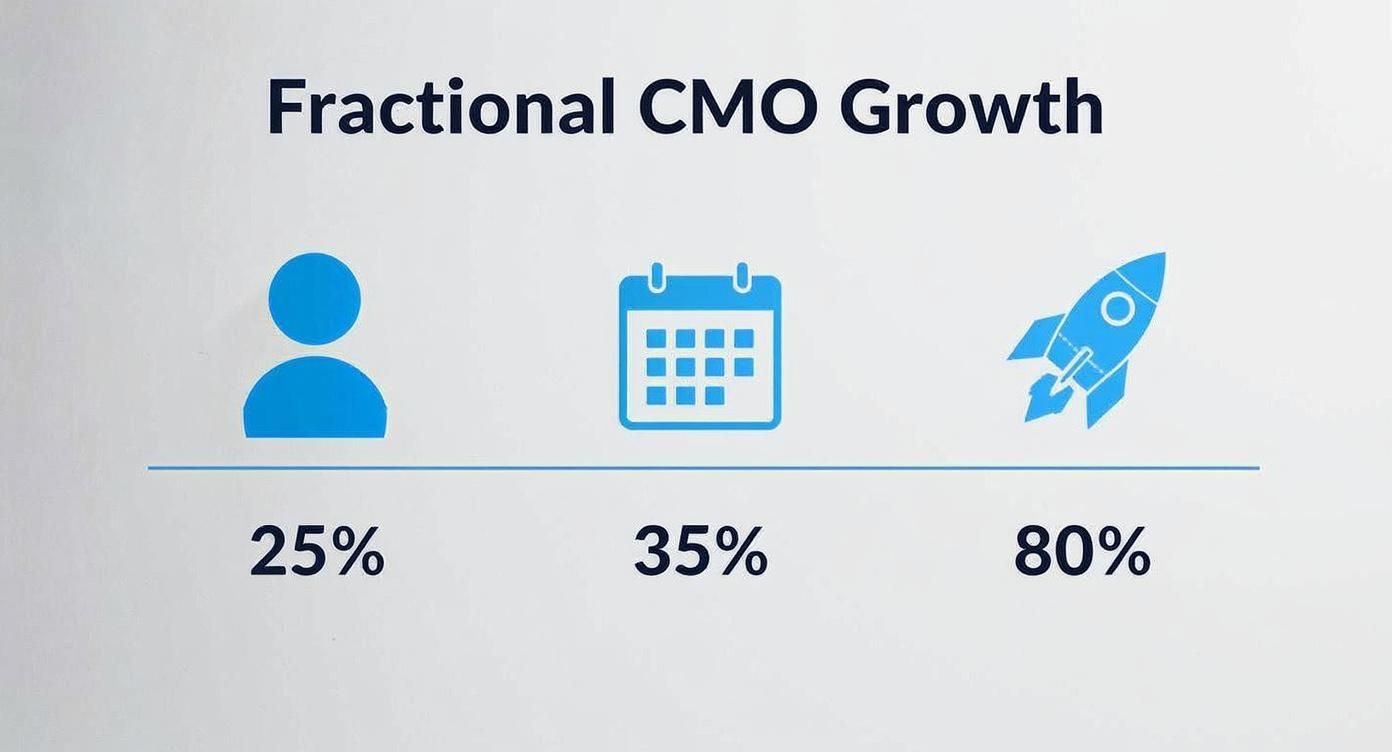
The trend is undeniable. Founders are realizing this model is a powerful shortcut to accelerating growth without the financial drag of a full-time executive payroll.
A Smarter Investment for Growth
At the end of the day, hiring a fractional CMO is a calculated financial move. You’re not just filling an empty seat on the org chart; you’re buying executive-level horsepower focused on building a scalable, predictable revenue machine.
You get the strategic mind you need, but you sidestep the massive overhead. The entire dynamic shifts from a fixed, hefty salary to a flexible, performance-driven partnership. For a B2B tech startup, that’s not just smart budgeting—it’s a powerful competitive advantage.
Finding the Right Engagement Model for Your Business
Choosing to work with a fractional CMO isn't a single decision; it’s about picking the right tool for the job. The model's real power lies in its flexibility. You get to subscribe to the exact level of strategic marketing leadership you need right now, without the long-term overhead of a full-time hire.
Not every B2B tech company needs a permanent, ongoing commitment from day one. Sometimes a short, sharp burst of strategy is enough to get the engine started. Other times, you need a steady hand on the wheel to navigate a period of intense growth.
Let's break down the most common ways to work together.
Short-Term Sprints for Quick Wins
This is the perfect fit for early-stage startups or any company facing a very specific, urgent problem. Think of it as calling in a specialist for a targeted operation. These engagements are fast, focused, and designed to deliver an actionable plan without locking you into a long-term contract.
A popular version of this is the Strategic Ignition Plan.
- Who It's For: Founders who feel stuck. Maybe you're not sure where to point your marketing dollars, or you need a killer go-to-market plan before a big launch.
- What to Expect: A rapid deep-dive into your business, your customers, and the market. The result is a prioritized roadmap—your playbook for the next six to twelve months.
- Typical Duration and Cost: These usually run for 4-6 weeks and are billed as a fixed project fee.
This model is all about building the foundation correctly before you start writing big checks for ad campaigns or new hires. It gets you unstuck and makes sure your next move is the right one.
Ongoing Retainers for Sustained Growth
Once you have a solid strategy and you’re ready to execute, an ongoing retainer makes the most sense. This is the classic fractional CMO setup, giving you continuous access to executive-level thinking for a fraction of the cost of a full-time salary.
This is less about a one-off project and more about building a scalable, predictable marketing function.
An ongoing fractional CMO engagement ensures that strategy doesn’t just get created; it gets implemented, measured, and optimized over time. It provides the consistent leadership needed to turn a plan into predictable revenue.
This model, often called a CMO Accelerator, provides end-to-end leadership. The fractional CMO helps you set the budget, defines your channel mix, and oversees the team executing the campaigns. It's the ideal setup for scale-ups that need to build real momentum, and often includes defining your ideal B2B marketing team structure to fuel that growth.
Hybrid and Advisory Models
As the fractional model has become more popular, the ways you can engage have gotten more creative. You'll now find everything from hourly advisory calls to performance-based contracts.
One of the most effective options is a hybrid model. This typically involves a smaller base retainer plus incentives tied directly to hitting business goals, like pipeline growth or lead generation targets. This model is a true partnership—it aligns the fractional CMO's success directly with your bottom line. You can discover more insights about fractional CMO pricing on saasconsult.co to get a better sense of the numbers.
Choosing the right fit starts with a clear-eyed look at what you need most. Are you trying to build a plan from the ground up, or do you need an experienced operator to guide your team's execution? Knowing the difference turns the idea of a "fractional CMO" into a set of smart, actionable choices for your business.
Your Step-by-Step Fractional CMO Hiring Checklist
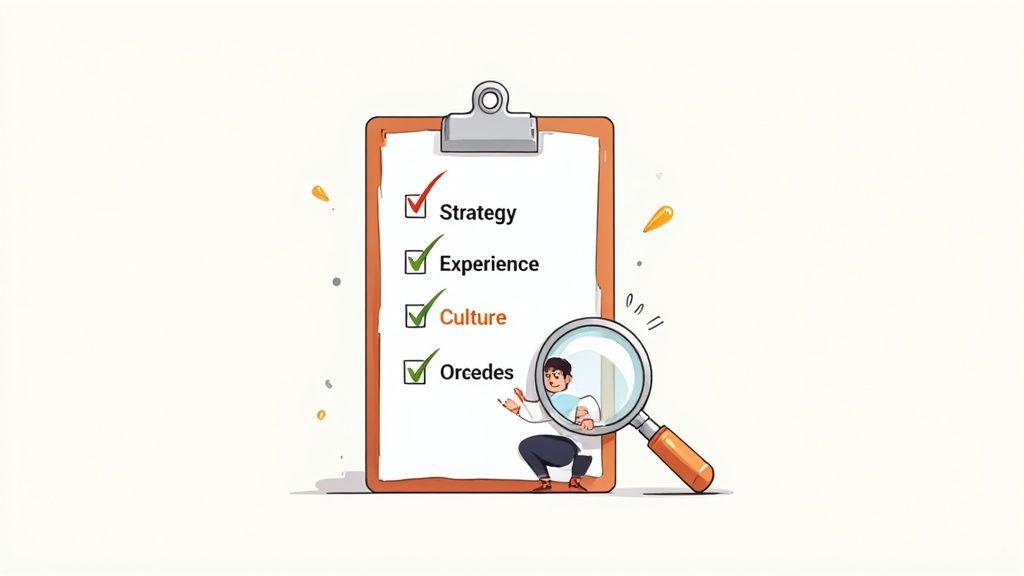
Finding the right fractional CMO isn't about filling a seat. It's about bringing on a strategic partner who can actually accelerate your growth. A great hire builds your marketing engine from the ground up; the wrong one burns through your budget with nothing to show for it.
Think of this process like finding a co-pilot. You need someone with the right technical skills, sure, but you also need someone who understands your destination and works well with your crew. Here’s how to get it right.
Step 1: Define Your Goals and Scope
Before you even think about looking at resumes, get crystal clear on what you’re trying to build or fix. Are you staring down a flat pipeline? Do you need a go-to-market plan for a new product? Is your real challenge scaling an existing team that’s hit its ceiling?
Be specific about the problem you're solving. A clear problem statement is the foundation for your entire search.
- Document the primary challenge: "We need to generate 50 qualified leads per month" is a goal. "We need more leads" is just a wish.
- Outline key responsibilities: Will they be building strategy from a blank slate, managing your current team, or both? Define the role's boundaries.
- Set a 90-day goal: What does success look like in the first quarter? This gives both of you an immediate, tangible benchmark to aim for.
Step 2: Vet for Industry and Stage-Specific Experience
Not all marketing experience is created equal. A CMO who killed it at a $500 million consumer brand probably doesn't have the right playbook for a seed-stage B2B SaaS startup. You absolutely need someone who has navigated the exact challenges you’re staring at right now.
When you're looking at candidates, you have to dig deeper than just their resume.
Don’t just look for "B2B experience." Look for experience with your specific business model (e.g., SaaS, marketplace), customer profile (e.g., SMBs, enterprise), and company stage (e.g., pre-seed, Series A). This nuance is the difference between a good fit and a great one.
Ask for case studies. Ask them to walk you through how they’ve solved similar problems for companies just like yours. If a candidate’s experience doesn’t line up, they’re probably not the right fit, no matter how impressive their background seems.
Step 3: Assess Strategic Thinking and Cultural Fit
Once you get to the interview stage, move past the resume. Your goal here is to understand how they think, not just what they’ve done. Give them a real problem your company is facing today and ask them how they’d tackle it.
Listen carefully to their process. Do they jump straight to tactics like "run more ads," or do they start by asking smart questions about your customers, your data, and your business goals? A true strategist diagnoses before they prescribe.
Cultural fit is just as critical. This person will be working shoulder-to-shoulder with your leadership team.
- Communication Style: Are they direct and data-driven? Can they communicate complex ideas simply?
- Pace and Agility: Do they thrive in a fast-moving startup environment, or are they used to a slower, more corporate pace?
- Team Integration: How do they plan to work with your existing people? You want a collaborator and a mentor, not a dictator.
As you prepare for these interviews, it’s helpful to know what to expect from a strategic marketing consultant, since many of the same principles apply. By following a clear process, you can find the right leader to guide your growth. To see how this works in practice, check out our guide on how to hire a fractional CMO for your B2B tech company.
How to Measure Success and What Results to Expect
Once you bring a fractional CMO on board, the big question is: is this actually working? Success isn't about feeling busy or seeing a flurry of activity. It’s about tangible, bottom-line results.
To get there, you need to throw out the vanity metrics. Forget obsessing over website traffic or social media "likes." A seasoned fractional leader will immediately shift the conversation to what truly moves the needle. They’ll help you build a dashboard centered on outcomes, not just activity.
This means getting laser-focused on the numbers that connect your marketing efforts directly to revenue. A great fractional CMO lives and dies by these metrics.
Key Metrics That Actually Matter
To make sure your investment is paying off, your success metrics should tell a clear story about your marketing engine's performance. The right leader will help you track and improve a specific set of KPIs that signal real business momentum.
Here are the big ones to watch:
- Customer Acquisition Cost (CAC): This is the total cost of your marketing and sales efforts to acquire one new customer. A primary goal is to make this number as efficient as possible.
- Marketing-Sourced Revenue: This metric shows exactly how much revenue came directly from marketing campaigns. It’s the ultimate proof that your strategy is working.
- Lead Velocity Rate (LVR): This measures the month-over-month growth in qualified leads. A rising LVR is a strong sign that you have a healthy and growing sales pipeline.
- Sales Cycle Length: A great marketing strategy doesn't just generate leads; it generates better-educated leads that close faster. Shortening the sales cycle is a huge win.
The goal isn't just to track these numbers but to understand the story they tell together. For instance, if your Lead Velocity Rate is climbing while your Customer Acquisition Cost is dropping, you’ve found a powerful, scalable growth formula.
What to Expect: A Realistic 90-Day Timeline
A fractional CMO starts delivering value from day one, but the results build over time. This isn't an overnight fix; it's about building a sustainable foundation for growth. It’s critical to have a realistic timeline for what to expect as they get up and running.
The first 90 days are usually broken down into distinct phases, moving from diagnosis to planning and finally to execution.
Below is a typical roadmap for what the first three months look like. It’s designed to deliver quick wins while setting the stage for long-term, scalable growth.
Typical 90-Day Fractional CMO Impact Plan
This table outlines what you can expect during the first three months of a fractional CMO engagement, setting clear expectations for success.
| Timeframe | Key Activities | Expected Outcomes |
|---|---|---|
| First 30 Days | Deep-dive audit, stakeholder interviews, competitive analysis, initial data review. | A clear diagnosis of what's working and what isn't. An initial strategic framework and quick wins are identified. |
| Days 31-60 | Finalize the 6-12 month marketing roadmap, define key metrics, and align the budget. | A complete, prioritized growth plan is delivered. The team is aligned, and initial campaigns or tests are launched. |
| Days 61-90 | Oversee initial execution, establish a reporting cadence, and begin optimizing campaigns. | Early data from new initiatives begins to flow. You'll see initial improvements in leading indicators like lead quality or LVR. |
This structured approach makes sure you see progress quickly while building the systems you need for long-term success.
If you're looking to get a better handle on this, you can learn more about how to measure marketing ROI in our detailed guide.
Common Questions About Fractional CMOs
Even after seeing the benefits, you probably have a few questions. That’s smart. Bringing on a fractional CMO is a big move, and you want to get the details right before you commit.
Let’s walk through the questions that pop up most often when founders and CEOs are thinking about hiring a fractional marketing leader.
How Much Time Do They Actually Work On Our Business?
This is the number one question, and the answer is refreshingly flexible. A fractional CMO engagement isn’t a rigid 9-to-5 deal. It’s all about what your business needs.
Most arrangements fall somewhere between 10 to 20 hours per week.
- For strategic guidance and mentoring your team: A commitment of 40-50 hours a month is pretty standard. That’s enough time for leadership syncs, one-on-ones with your marketers, and steering the big-picture strategy.
- For more hands-on work: During a critical launch or a big growth push, the hours might tick up temporarily to get the job done.
The key thing to remember is that you're paying for results, not just hours logged. A great fractional CMO makes every minute count, focusing only on the high-impact moves that push your business forward.
How Do They Plug Into Our Existing Team?
A fractional CMO isn’t some consultant who just emails over a report. They become a real, integrated part of your leadership crew. Their goal is to lead, mentor, and level up your existing marketing team—not replace them.
Here’s how they usually get integrated:
- They Join Leadership Meetings: They’ll have a seat at the table during executive discussions to make sure marketing is perfectly synced with your core business objectives.
- They Run the Marketing Huddle: They take charge of the weekly marketing meetings, setting the priorities, clearing roadblocks, and making sure everyone is focused and accountable.
- They Coach Your People: They hold one-on-ones to provide direct mentorship, helping your marketing staff build new skills and grow in their careers.
A top-tier fractional CMO is a force multiplier. They don't just bring their own skills; they make your entire marketing operation smarter, more strategic, and more effective.
Are They Only a Good Fit for Early-Stage Startups?
While they're a perfect match for early-stage B2B tech companies, the model works incredibly well for businesses at different points in their journey. Scale-ups often bring in a fractional CMO to add a layer of professional leadership to their marketing function or to fill the gap before hiring a full-time VP of Marketing.
Even established companies will tap a fractional leader for a specific, high-stakes project—like a major product launch or breaking into a new market. The model’s flexibility makes it a sharp strategic tool for any company that needs expert marketing leadership without the full-time price tag.
Ready to get the senior marketing leadership you need to hit your growth targets? Value CMO builds data-driven marketing roadmaps for B2B tech companies, giving you the strategic firepower to nail your revenue goals. Learn more about how we can help.