
In the world of B2B tech, the inbox is a battlefield. Every day, decision-makers get bombarded with generic pitches and soulless automation. But what if your emails could actually cut through the noise? What if they could build real relationships, solve real problems, and drive real growth? Forget the old playbook. This isn't about blasting a list; it's about connecting with the people steering complex organizations.
For tech startups and scale-ups, where every single interaction counts, mastering the art and science of email is non-negotiable. It’s time to move beyond vanity metrics like open rates and focus on what truly matters: creating tangible value for your prospects. We’ve pulled together 10 essential B2B email marketing best practices that blend strategic precision with a much-needed human touch, designed to help you build a pipeline that’s not just full, but engaged and ready to convert.
This guide goes beyond surface-level tips. We'll dive into actionable strategies covering everything from hyper-targeted Account-Based Marketing (ABM) personalization and smart segmentation to building a bulletproof sender reputation. You'll learn how to craft multi-touch drip campaigns that actually nurture leads, design mobile-first experiences, and use behavioral tracking to understand what people really want. We'll also cover the critical, non-negotiable stuff like compliance and permission-based marketing to ensure your efforts are both effective and ethical. Each practice is broken down with practical steps, real-world examples, and the strategic insight you need to turn your email program into a powerful revenue engine.
1. Account-Based Marketing (ABM) Personalization
Account-Based Marketing (ABM) flips the traditional marketing funnel on its head. Instead of casting a wide net and hoping for the best, ABM is a hyper-focused strategy where your marketing and sales teams join forces to treat an entire high-value company as a single market. This approach is a cornerstone of effective b2b email marketing best practices because it swaps out generic mass emails for deeply personalized, coordinated outreach tailored to the specific challenges and goals of a target account.

The core idea is to go beyond segmenting by industry or company size and get to know individual accounts. For a tech startup, this means drawing up a "dream list" of 10-50 companies that would be perfect-fit customers. Every email is then crafted to hit home with that specific company and the key decision-makers inside. For example, a campaign for a logistics software company might target a retail giant by referencing their latest annual report's supply chain goals right in the email copy.
How to Implement ABM Personalization
Getting an ABM strategy off the ground requires a systematic and data-driven approach. It's best to start small, nail the process, and then scale up.
- Identify High-Value Accounts: Use firmographic data (company size, industry, revenue) and intent data (signals that a company is actively researching solutions like yours) to build your target account list. Platforms like Demandbase and 6sense are great for this kind of intelligence.
- Map the Buying Committee: Within each account, figure out who the key players are. Create distinct buyer personas for the CTO, the Head of Product, and the Procurement Officer, since each will have different pain points and priorities.
- Develop Tailored Content: Craft 4-5 personalized email sequences for each account. The emails shouldn't just insert a company name; they should speak to specific initiatives, reference company news, or address challenges unique to their industry.
- Synchronize Your Outreach: Coordinate email sends with your sales team's outreach on platforms like LinkedIn Sales Navigator. A well-timed email that reinforces a sales call can make a huge difference in response rates.
- Measure Account-Level Engagement: Shift your focus from individual open rates to account-wide engagement. Are multiple stakeholders from the target company opening emails, clicking links, or visiting your site? This bigger picture gives you a much truer sense of your impact.
2. Segmentation and List Hygiene
Smart segmentation and diligent list hygiene are the absolute bedrock of any successful B2B email program. Instead of sending the same message to everyone, segmentation is all about strategically dividing your email list into smaller, more relevant groups based on shared characteristics. This practice, combined with regular list cleaning, makes sure your messages land with the right people, improving deliverability and overall campaign effectiveness. It’s a critical piece of b2b email marketing best practices that directly impacts engagement and ROI.

The guiding principle here is relevance. A CTO at a 500-person fintech company has completely different challenges than a Marketing Manager at a 20-person SaaS startup. Sending them both a generic "product update" email is a huge missed opportunity. Instead, segmentation lets you tailor your messaging to their specific industry, job role, company size, or even their past interactions with your brand. For instance, HubSpot has seen engagement jump by over 50% just by segmenting contacts based on their lifecycle stage, proving that a targeted message is a powerful one.
How to Implement Segmentation and List Hygiene
A clean, well-segmented list is an ongoing effort, not a one-time task. Building this into your regular marketing operations will pay off big time in the long run for your deliverability and engagement.
- Segment by Multiple Dimensions: Don't just rely on one attribute. Combine data points for some seriously powerful targeting. Create segments based on industry, company size, job function (e.g., C-suite vs. individual contributors), and their engagement level. This lets you get super personal with your campaigns.
- Implement Quarterly List Audits: Schedule a regular review of your email list every 90 days. The goal is to spot and remove non-engaged contacts, like subscribers who haven't opened an email in the last six months. This keeps your list healthy and your sender reputation strong.
- Use Engagement Scoring: Set up a system to score leads based on their activity, like email opens, clicks, and website visits. This helps you identify your most active subscribers for targeted campaigns and those at risk of churning who might need a re-engagement sequence.
- Maintain a Low Bounce Rate: Always keep an eye on your bounce rates. A hard bounce rate above 2% is a red flag for email service providers and can hurt your deliverability. Use validation tools to clean your list before a major send.
- Leverage Intent Data: Go beyond simple firmographics by bringing in intent signals. Knowing which accounts are actively researching solutions like yours adds a powerful layer to your segmentation strategy. You can learn more about harnessing this approach for your B2B startup to supercharge your outreach.
3. Subject Line Optimization, Testing, and Continuous Optimization
The subject line is the single most critical element of your B2B email campaign. Think of it as the gatekeeper to all your valuable content. It’s the first impression that decides whether your email gets opened or ignored. Nailing subject line optimization is a core part of b2b email marketing best practices because it directly impacts your open rates, which then affects every other metric, from click-throughs to conversions. A poorly crafted subject line means even the most brilliant email body is useless.
This practice is more than just writing catchy phrases; it's a scientific process of crafting, testing, and refining your hunches to understand what truly clicks with your audience. For a B2B tech startup, this means ditching the guesswork and embracing data-driven experiments. For instance, testing a subject line with a specific number (like "Boost your ROI by 20%") against one with a question (like "Is your current software holding you back?") can reveal powerful insights about what motivates your audience.
How to Implement Subject Line Optimization
A systematic approach to testing and optimization ensures your efforts lead to measurable improvements over time. The goal is to build a playbook of what works for your unique audience.
- Test One Variable at a Time: To get clean data, isolate a single element for each A/B test. Test length (e.g., 35 characters vs. 60), personalization (e.g., using
{{company.name}}vs. no personalization), or emotional triggers (like curiosity vs. urgency). - Keep It B2B Concise: Aim for subject lines between 35-50 characters. This makes sure your full message is visible in mobile email client previews, which is where a huge chunk of B2B pros check their inbox.
- Embrace Specificity and Data: Vague promises fall flat in B2B. Use specific numbers and data points to add credibility and grab attention. HubSpot's research found that subject lines with personalization tokens can boost open rates by as much as 26%.
- Establish a Testing Framework: Before you start testing, define your baseline metrics. Document every test's hypothesis, variable, and results in a shared place. This creates a cycle of continuous improvement that informs all future campaigns.
- Leverage AI for Ideation: Modern tools can help you brainstorm dozens of subject line variations in a snap, freeing you up to focus on strategy and analysis. You can learn more about building an AI-assisted writing workflow for marketing to scale your testing efforts.
4. Valuable Content and Lead Magnets
Great B2B email marketing isn't just about the message; it's about the value you deliver right to your prospects' inboxes. Offering high-quality, relevant content and premium lead magnets is a fundamental way to earn attention and trust. This approach is a core part of b2b email marketing best practices because it shifts the dynamic from a sales pitch to a valuable exchange. It positions your brand as a helpful expert, not just another vendor trying to sell something.
The principle is simple: instead of asking for a meeting, you offer a solution to a problem. This solution is packaged as a resource like a whitepaper, case study, webinar, or template. For instance, a cybersecurity startup could offer a detailed whitepaper on "The Top 10 Security Threats for FinTech in 2024." This would attract highly relevant prospects who are actively looking for that information. LinkedIn's annual 'Workplace Learning Report' is a perfect example of this, generating thousands of qualified leads by providing unique data HR leaders can't find anywhere else.
How to Implement Valuable Content and Lead Magnets
Creating content that genuinely attracts and qualifies prospects takes a strategic, pain-point-focused approach. It’s all about solving problems first and selling second.
- Identify Core Pain Points: Use keyword research tools like Ahrefs or Semrush and chat with customers to pinpoint the biggest challenges your ideal customers face. Build your content calendar around these specific topics, not just generic overviews.
- Gate Your Premium Assets: Offer content like blog posts for free to build awareness. But save your most in-depth, high-value resources (like original research reports, ROI calculators, or comprehensive templates) as gated lead magnets that require an email address to access.
- Show, Don't Just Tell: When creating case studies, go beyond a simple story. Include measurable results, ROI data, and direct quotes from the customer. This provides real proof of your solution's impact and builds a ton of credibility.
- Develop Complementary Content: Create content series that nurture leads through their decision-making process. A prospect who downloads a top-of-funnel ebook could then get a follow-up email with a relevant case study, followed by an invitation to a product-focused webinar.
- Repurpose Strategically: Get the most out of your efforts by repurposing a single cornerstone piece of content into multiple formats. A live webinar can be turned into a whitepaper, a series of short video clips for social media, and a multi-part email nurture sequence.
5. Multi-Touch and Drip Campaign Sequences
A single email rarely closes a B2B deal. Success comes from creating automated, multi-touch email sequences that deliver the right message at the right time. This is where drip campaigns become a critical part of b2b email marketing best practices. They move prospects through the sales cycle with consistent, strategic messaging that builds trust and keeps the momentum going without you having to do everything manually.
Instead of one-off "batch and blast" emails, a drip sequence nurtures leads based on where they are in their buying journey. Someone who downloads a whitepaper might trigger a 5-part educational series, while a visit to your pricing page could kick off a sequence highlighting ROI and customer case studies. For example, B2B SaaS companies using HubSpot's workflow automation often see conversion rates jump by over 40% just by delivering this kind of timely, relevant content.
How to Implement Multi-Touch and Drip Campaigns
Building effective drip sequences is both a science and an art. It requires a deep understanding of your buyer's journey and a real commitment to providing value at every single stage.
- Design Persona-Based Sequences: Ditch the one-size-fits-all approach. Craft different nurture streams for different buyer personas. The CTO, for example, cares about integration and security, while the CFO is focused on the total cost of ownership. Your emails should reflect that.
- Pace Your Communication: Space your emails 3-7 days apart. This frequency keeps your brand top-of-mind without overwhelming their inbox, which is key to keeping unsubscribe rates low.
- Vary Your Content: A strong sequence should include a mix of content types. Alternate between educational blog posts, social proof like testimonials, in-depth case studies, and eventually, a clear call-to-action for a demo or consultation.
- Use Behavioral Triggers: Use your marketing automation platform to send emails based on what users do. If a prospect clicks a link about a specific feature, trigger a follow-up email that dives deeper into that feature's benefits.
- Build in 'Exit Ramps': Not every lead needs to see the full sequence. Create rules that automatically pull a prospect out of a nurture drip and alert a sales rep when they show strong buying signals, like requesting a quote or visiting the pricing page multiple times. Building this logic is a key part of an effective B2B marketing strategy framework.
6. Clear Call-to-Action (CTA) and Landing Page Alignment
Your email's call-to-action (CTA) is the single most important bridge between your recipient's inbox and a conversion. In B2B, where decision-making is complex, a vague or confusing CTA creates friction that can stop potential leads dead in their tracks. That's why a core principle of b2b email marketing best practices is to design a single, prominent CTA with clear, action-oriented copy that aligns perfectly with a dedicated landing page.
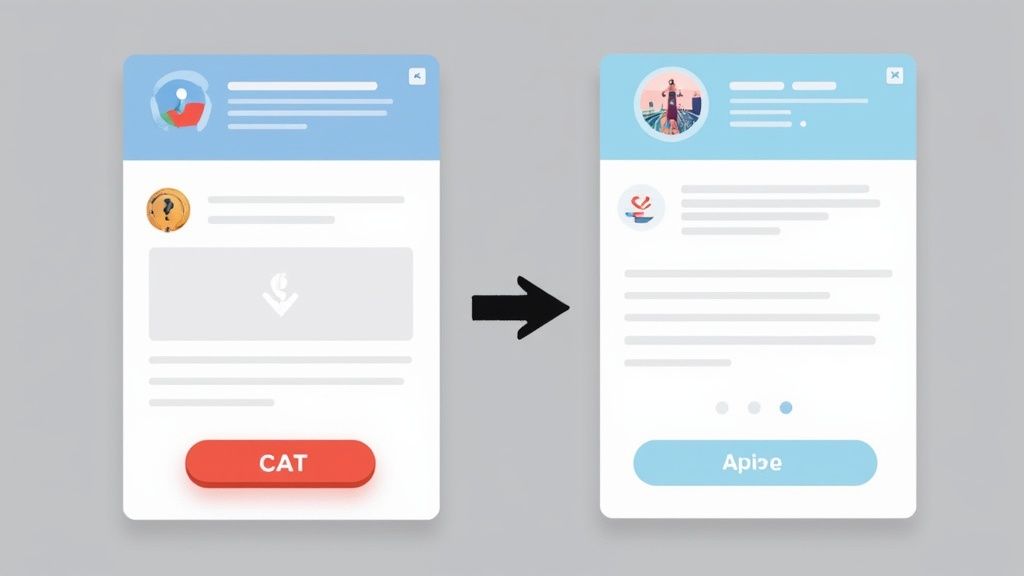
The goal is to create a seamless, intuitive journey from click to conversion. When a busy CTO clicks "Download the Q3 Cybersecurity Report," they expect to land on a page where that specific report is the star of the show, not your generic homepage. This alignment builds trust and keeps the momentum going. For instance, Campaign Monitor found that CTAs with specific, action-oriented text like "Download Report" outperform generic alternatives by a staggering 42%, which just shows the power of being clear.
How to Implement Clear CTAs and Page Alignment
Creating a high-converting CTA and landing page experience is a mix of design psychology, copywriting, and technical know-how. The main goal is to remove any potential for confusion or distraction.
- Use Action-Oriented, Benefit-Driven Language: Instead of a passive "Learn More," use active phrases that scream value, like "Get My Free Demo" or "Reserve Your Seat." The copy should tell the user exactly what's going to happen next.
- Design for Visibility and Accessibility: Your CTA button should pop. Use a color that contrasts sharply with the email's background, make sure the text is easy to read, and place it "above the fold" so it’s visible without scrolling, especially on mobile.
- Maintain Message Match: The headline of your landing page must directly mirror the promise of your email's CTA. If the email says "Explore Our AI Features," the landing page headline should be identical or very close. This reassures users they’re in the right place.
- Strip Down the Landing Page: Get rid of all unnecessary navigation menus, sidebars, and competing links on your landing page. The only purpose of this page is to fulfill the promise of the CTA, so eliminate anything that could distract the user and cause them to leave.
- Keep CTA Text Concise: Aim for 2-5 words, max. The button should be scannable and instantly understandable. LinkedIn's "View Full Profile" CTA generates 3x more engagement than generic alternatives just by being direct and specific.
7. Sender Reputation and Deliverability Management
Even the most brilliantly crafted email is useless if it lands in the spam folder. Sender reputation and deliverability management is the technical foundation of all successful email campaigns. It’s all about a set of operational and technical steps that signal to Internet Service Providers (ISPs) like Gmail and Outlook that you are a legitimate, trustworthy sender. This ensures your emails actually reach the intended inbox. For B2B tech startups, overlooking this is one of the costliest mistakes you can make, as a poor reputation can cripple your outreach efforts overnight.
This discipline is a core part of b2b email marketing best practices because it directly impacts your entire funnel. Strong deliverability ensures your message is seen by high-value prospects, protects your domain from being blacklisted, and maximizes the ROI of all your hard work on content and personalization. Think of it as the digital equivalent of having a professional business address; it builds trust before the recipient even opens your message. For instance, data from Validity (formerly Return Path) shows that simply setting up proper authentication like SPF and DKIM can improve inbox placement by 3-5%.
How to Implement Sender Reputation and Deliverability Management
Managing your sender reputation is an ongoing process of technical setup and vigilant monitoring. It requires a proactive, not reactive, approach to stay in the inbox.
- Implement the Full Authentication Stack: Configure your sending domain with all three essential security protocols. Start with SPF (Sender Policy Framework) to specify which mail servers can send on your behalf, add DKIM (DomainKeys Identified Mail) to digitally sign your emails, and finally deploy DMARC (Domain-based Message Authentication, Reporting, and Conformance) to tell receiving servers how to handle unauthenticated mail.
- Warm Up New IP Addresses: If you're using a new dedicated IP or email service provider, you have to build its reputation gradually. Start by sending a small volume (say, 500 emails on day one) to your most engaged contacts and slowly ramp up the volume over 3-4 weeks. This predictable pattern signals to ISPs that you're legit.
- Maintain Impeccable List Hygiene: Never, ever use purchased lists. Only send to people who have given you permission to email them. Aggressively manage your bounce rates, aiming to keep hard bounces (permanent delivery failures) below 2%. Immediately remove any email address that hard bounces more than once.
- Monitor Key Deliverability Metrics: Keep a close eye on your complaint rate—it should always be below 0.1%. Use list suppression tools to automatically remove users who mark your emails as spam.
- Utilize Deliverability Tools: Lean on platforms like Validity (which acquired 250ok and Return Path) or GlockApps to monitor your inbox placement across various ISPs, check for blacklist issues, and get actionable insights to improve your sending practices.
8. Mobile-First Email Design
Mobile-first email design isn't just an option anymore; it's a must for modern B2B communication. This approach means you design emails for the smallest screen first, making sure they are functional, readable, and engaging on a phone before you adapt the design for larger screens like tablets and desktops. Embracing this is one of the most critical b2b email marketing best practices, as studies from Litmus show that over 60% of B2B professionals now prefer reading their emails on mobile.
Ignoring the mobile experience means you're likely alienating most of your audience. A clunky, hard-to-read email that requires pinching and zooming will be deleted in seconds. On the flip side, a clean, responsive email that loads quickly and presents a clear call-to-action (CTA) respects your prospect's time and where they are. HubSpot found that mobile-optimized emails can get up to 10% higher click-through rates—a significant lift that directly impacts your pipeline.
How to Implement Mobile-First Email Design
Adopting a mobile-first philosophy means shifting your design process from a desktop-down to a mobile-up approach. It's all about simplicity and clarity.
- Embrace the Single-Column Layout: The easiest way to ensure a great mobile experience is to use a single-column layout. This structure naturally flows well on any screen size and gets rid of annoying horizontal scrolling. Data from Dyspatch shows that single-column designs see up to 25% better engagement on mobile devices.
- Prioritize Readability: Use a minimum font size of 14px for body copy and 20px or more for headings. Choose high-contrast color combinations, like dark text on a light background, to make sure it's legible in different lighting conditions.
- Design Thumb-Friendly CTAs: Make your call-to-action buttons large and easy to tap. Apple’s human interface guidelines recommend a minimum target size of 44×44 pixels. This prevents frustration and makes it effortless for users to take the next step.
- Optimize for Speed: Compress all your images to reduce their file size and make sure your emails load quickly, even on slower mobile networks. A fast-loading email is far less likely to be abandoned.
- Test Relentlessly: Before you hit send, use tools like Litmus or Email on Acid to preview how your email will look across dozens of mobile devices and email clients. This step catches critical formatting issues before they ever reach your prospects.
9. Behavioral Tracking and Engagement Scoring
Behavioral tracking and engagement scoring let you move beyond surface-level metrics like open rates, giving you a dynamic system to measure a prospect's real buying intent. This strategy involves assigning point values to specific actions a contact takes, from opening an email to downloading a whitepaper or visiting your pricing page. This numbers-based approach is a vital part of modern b2b email marketing best practices because it turns raw data into a clear, prioritized roadmap for your sales team.
Instead of treating every lead the same, engagement scoring lets you identify and focus on the prospects who are actively showing interest. This system creates a feedback loop where engagement and behavior inform sales priorities and trigger automated nurturing sequences. For example, platforms like HubSpot use engagement scoring to help companies identify up to 40% more marketing-qualified leads (MQLs) by focusing on genuine intent signals rather than just demographic data.
How to Implement Behavioral Tracking and Engagement Scoring
Building an effective scoring model is a strategic and iterative process. Start with a simple framework and then refine it based on performance data and feedback from your sales team.
- Define Key Engagement Indicators: Start by identifying 3-5 high-intent actions. Assign point values that reflect how significant the action is. For instance: email open (+1), link click (+5), whitepaper download (+10), or demo request (+50).
- Integrate Website Behavior: Combine email engagement data with website activity for a complete picture. Tracking visits to high-value pages like pricing, case studies, or features provides crucial context that email metrics alone can't give you.
- Set an MQL Threshold: Establish a specific score that qualifies a lead for sales outreach. For example, you might set a threshold of 50 points, which automatically triggers a notification to the assigned sales rep.
- Implement a Score Decay Model: Keep your scoring relevant by implementing a decay system. Automatically reduce a lead's score if they don't engage for a set period, like 30-60 days, to stop sales from chasing cold leads.
- Review and Refine Quarterly: Your scoring model isn't set in stone. Analyze which leads converted to opportunities and customers, and then adjust point values based on the behaviors they showed. This ensures your model accurately predicts buying intent over time.
10. Compliance, Privacy, and Permission-Based Marketing
In the high-stakes world of B2B marketing, trust is your most valuable asset. Compliance, privacy, and permission-based marketing aren't just legal checkboxes; they are the foundation for building sustainable relationships with high-value accounts. This approach is all about earning consent and respecting user data, which is a critical part of modern b2b email marketing best practices. It ensures your outreach is not only legally sound under regulations like GDPR, CAN-SPAM, and CCPA but also welcomed by the people you're emailing.
Permission-based marketing means you only send emails to contacts who have explicitly agreed to receive them. This philosophy changes your brand from being an intruder in the inbox to a trusted advisor, which dramatically improves deliverability, engagement, and long-term brand equity. For tech startups, building a brand on trust from day one prevents costly legal issues and reputational damage down the line—just look at the hefty fines handed out under GDPR for non-compliance.
How to Implement Compliance and Permission-Based Marketing
Weaving compliance into your marketing DNA requires a proactive and transparent process. It's about respecting your audience's inbox and giving them full control over their data.
- Implement Double Opt-In: Require new subscribers to confirm their email address with a verification link. This builds a highly engaged list from the get-go and creates an undeniable record of consent, which is crucial for GDPR.
- Make Unsubscribing Effortless: Every single email must include a clear, one-click unsubscribe link in the footer. Hiding this option destroys trust and can lead to spam complaints, which will tank your sender's reputation.
- Provide Full Transparency: Your email footer should always have your company's name and physical mailing address. This is a key requirement of the CAN-SPAM Act and signals to your subscribers that you're a legitimate business.
- Maintain Meticulous Consent Records: Keep track of how and when each contact gave you permission to email them. Your email service provider (ESP) should help with this, but it’s your responsibility to make sure the data is accurate.
- Use a Preference Center: Go beyond a simple unsubscribe option. Let subscribers choose the types of content they receive (e.g., product updates, blog digests, event invitations). This gives them control and makes a full opt-out less likely.
B2B Email Marketing: 10-Point Best Practices Comparison
| Tactic | Implementation Complexity 🔄 | Resource Requirements ⚡ | Expected Outcomes 📊 ⭐ | Ideal Use Cases 💡 | Key Advantages ⭐ |
|---|---|---|---|---|---|
| Account-Based Marketing (ABM) Personalization | High — deep account research, cross-team coordination | High — ABM platforms, intent data, dedicated account teams | Very high — improved conversion and ROI; deeper executive relationships | Enterprise or high-value target accounts with long sales cycles | Precision targeting; strong sales-marketing alignment; higher ROI |
| Segmentation and List Hygiene | Medium — ongoing maintenance and data integration | Medium — ESP features, validation services, data providers | Improved deliverability and engagement; lower wasted sends | Broad B2B lists requiring quality and regular sends | Better inbox placement; cost savings; higher lead quality |
| Subject Line Optimization, Testing & Continuous Optimization | Low–Medium — testing framework and analysis | Low — A/B tools, analytics, copy resources | Quick open-rate lifts; cumulative performance gains over time | Any program with sufficient volume aiming to boost opens | Fast wins; data-driven improvements; low cost to test |
| Valuable Content and Lead Magnets | Medium–High — content creation and validation cycles | High — SME time, design, production, promotion | Higher-quality, qualified leads; thought leadership impact | Top-of-funnel demand gen for complex or research-driven buys | Attracts engaged prospects; establishes credibility; reusable assets |
| Multi-Touch and Drip Campaign Sequences | Medium — automation logic and trigger mapping | Medium — Marketing automation, content library, workflows | Consistent nurturing; higher conversion through staged engagement | Nurturing leads across buyer journey; onboarding sequences | Scalable personalization; persistent engagement with less manual work |
| Clear CTA and Landing Page Alignment | Low — coordination between email and landing teams | Low–Medium — landing page builder, design resources | Higher CTR and conversion; clearer attribution | Campaigns focused on a single action (download, demo, signup) | Reduced friction; improved conversion confidence; better tracking |
| Sender Reputation & Deliverability Management | High — technical DNS/authentication and monitoring | Medium–High — deliverability tools, possible dedicated IPs, technical staff | Much higher inbox placement and predictable deliverability | High-volume senders and mission-critical email programs | Strong inbox placement; reduced spam risk; domain protection |
| Mobile-First Email Design | Medium — responsive templates and cross-client testing | Medium — designers, responsive templates, testing tools | Improved mobile engagement and CTR; lower unsubscribes | Audiences with majority mobile opens or mobile-heavy workflows | Better mobile UX; increased click rates; professional presentation |
| Behavioral Tracking and Engagement Scoring | High — integrations, modeling, and data governance | High — tracking tools, CRM integration, analytics expertise | Better lead prioritization; shorter sales cycles; higher conversion | Sales-driven organizations needing intent signals and prioritization | Predictive prioritization; targeted follow-up; improved sales efficiency |
| Compliance, Privacy & Permission-Based Marketing | Medium–High — legal, consent management, cross-jurisdictional rules | Medium — CMPs, legal support, consent records systems | Lower legal risk; higher trust and sustainable engagement | Companies operating across regions or with strict privacy requirements | Legal protection; higher list quality; improved subscriber trust |
From Best Practices to Best-in-Class Performance
Navigating B2B email marketing can feel like assembling a complex engine. You have all the parts laid out in front of you: hyper-personalized ABM campaigns, rigorous list segmentation, mobile-first design, and sophisticated automation. But just having the parts isn't enough. The real power comes from understanding how each piece connects and works together to drive your business forward. Adopting these b2b email marketing best practices isn't about ticking off items on a checklist; it's about fundamentally shifting your approach from just broadcasting messages to building meaningful, scalable relationships.
The journey from a decent email program to a world-class growth engine is paved with intentional details. It’s found in the relentless commitment to data hygiene, making sure every message reaches a real, engaged human. It’s built on the courage to A/B test everything, from your subject lines to your CTA button color, and the discipline to let data, not assumptions, guide your next move. Above all, it’s about prioritizing the recipient’s experience—treating their inbox as a privileged space, not a billboard.
Weaving the Threads into a Cohesive Strategy
For B2B tech startups and scale-ups, this isn't just marketing theory—it's the blueprint for a predictable and powerful revenue pipeline. Let’s break down the core principles we’ve covered into some actionable takeaways:
- Precision Over Volume: The era of "spray and pray" is definitively over. Success now hinges on laser-focused segmentation and ABM personalization. Your goal isn't to reach everyone, but to deeply resonate with the right accounts and decision-makers who can truly benefit from your solution.
- Value is Your Currency: Every email you send must deliver genuine value. Whether it’s an insightful lead magnet, a helpful case study, or a solution to a specific pain point, your content has to earn the attention of your busy audience. This value exchange is the foundation of trust and long-term engagement.
- Automation with a Human Touch: Use behavioral tracking and multi-touch drip campaigns to automate communication at scale, but never lose the human element. The best automation feels less like a machine and more like a timely, helpful conversation, guiding prospects through their buying journey at their own pace.
- Technical Excellence is Non-Negotiable: Things like sender reputation, deliverability, and mobile-first design aren't secondary concerns. They are the bedrock of your entire program. A brilliant message that lands in spam or is unreadable on a phone is a message that was never really sent.
Your Actionable Path Forward
The sheer volume of these best practices can feel overwhelming, but progress is about momentum, not perfection. Don't try to boil the ocean. Instead, choose one or two key areas to master first.
Maybe your biggest opportunity lies in cleaning and segmenting your database. Or perhaps your team is ready to build its first sophisticated, behavior-triggered drip sequence. Pick a focus, define what success looks like with clear metrics, and execute with precision. Once you see the tangible impact on your pipeline, you’ll have the internal buy-in and momentum to tackle the next challenge.
Ultimately, mastering these b2b email marketing best practices transforms your email channel from a simple communication tool into a strategic competitive advantage. It’s the difference between hoping for leads and systematically engineering a pipeline full of them. This is a marathon, not a sprint, but every step you take on this path builds a more resilient, predictable, and profitable growth engine for your company. The journey is challenging, but the rewards are well worth the effort.
Building a best-in-class email marketing engine requires more than just the right tools; it demands expert strategy and leadership. If your team needs senior-level guidance to define this strategy, build the growth roadmap, and lead the execution, a fractional CMO from Value CMO can provide the focused expertise to accelerate your results without the overhead of a full-time hire. Explore how we help B2B tech companies scale smarter at Value CMO.